
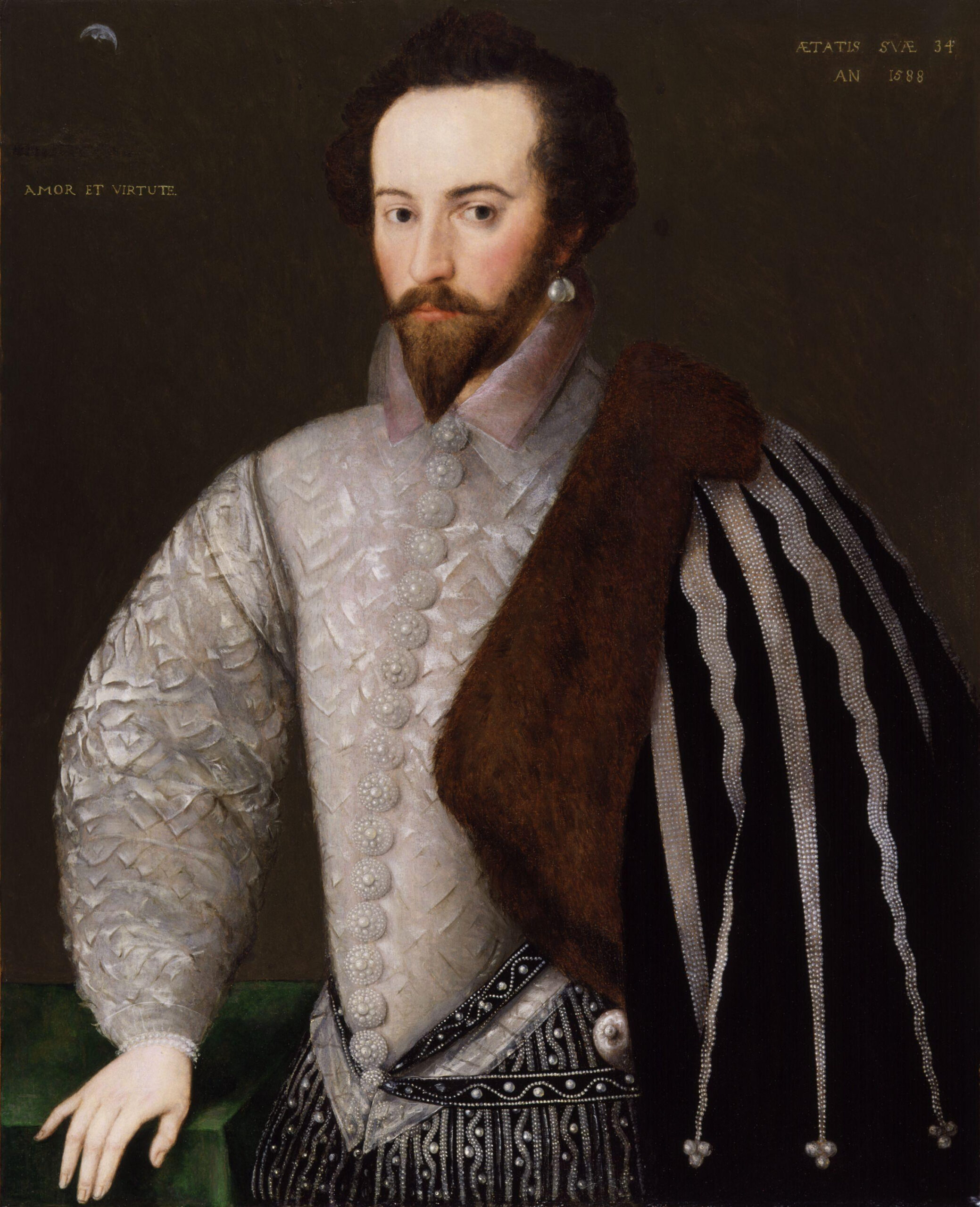
Walter Raleigh, born on January 22, 1552, in East Devon, England, is a figure of enduring historical significance. His life was marked by adventure, exploration, and a tumultuous relationship with the English monarchy. Raleigh’s legacy is a blend of his contributions as an explorer, his role in the colonization of the New World, his literary achievements, and his dramatic downfall. This article delves into the life of Walter Raleigh, exploring his rise to fame, his contributions to history, and the eventual tragedy that befell him.
Early Life and Education: Foundations of a Renaissance Man
Walter Raleigh was born into a family of moderate wealth and influence in East Devon. His upbringing was marked by the religious turbulence of the time, which had a profound impact on his worldview. Raised in a Protestant household, Raleigh developed a deep-seated animosity toward Roman Catholicism, a sentiment that would influence his actions throughout his life.
Raleigh’s early education is somewhat shrouded in mystery, but it is known that he spent some time studying at Oriel College, Oxford, before leaving without a degree. His thirst for adventure and his disdain for a conventional life led him to join the Huguenot forces in France in 1569, where he witnessed the brutalities of the French Wars of Religion. This period of Raleigh’s life forged his character and deepened his commitment to the Protestant cause.
Raleigh the Explorer: The Quest for New Worlds
Walter Raleigh’s name is inextricably linked with the age of exploration, a time when European powers were expanding their empires across the globe. In 1584, Raleigh received a royal charter from Queen Elizabeth I, granting him the right to explore, colonize, and govern any land not already claimed by Christian monarchs. This charter marked the beginning of Raleigh’s most famous endeavor: the colonization of North America.
Raleigh’s expeditions to the New World were driven by both ambition and a desire to spread Protestantism. In 1585, he organized a voyage that led to the establishment of the Roanoke Colony in what is now North Carolina. This colony, although ultimately unsuccessful, was a significant step in the English colonization of the Americas. Raleigh named the region “Virginia” in honor of Queen Elizabeth, the “Virgin Queen.”
The Roanoke Colony is often remembered as the “Lost Colony” due to the mysterious disappearance of its inhabitants. Despite this failure, Raleigh’s efforts laid the groundwork for future English settlements in the New World. His vision of an English empire in America would eventually be realized, though not within his lifetime.
The Rise to Favor: Courtier, Soldier, and Poet
Walter Raleigh’s exploits in the New World were only part of his storied career. Back in England, he became a favorite of Queen Elizabeth I, who was impressed by his charisma, intelligence, and unwavering loyalty. Raleigh’s rise to prominence at court was meteoric, and he quickly became one of the queen’s most trusted advisors.
In addition to his role as an explorer, Raleigh was a soldier and a poet. He played a significant role in the suppression of the Desmond Rebellions in Ireland, which earned him vast estates in Munster. These lands made Raleigh one of the largest landowners in Ireland, further solidifying his status among the English elite.
Raleigh was also a gifted writer, and his poetry and prose were highly regarded in his time. His works often reflected the themes of love, honor, and chivalry, which were central to the culture of the Elizabethan court. Among his most famous poems is “The Nymph’s Reply to the Shepherd,” a response to Christopher Marlowe’s “The Passionate Shepherd to His Love.”
Raleigh’s talents extended beyond poetry; he was also a historian and scholar. During his imprisonment in the Tower of London, he wrote “The Historie of the World,” a comprehensive work that covered the history of ancient civilizations. Although the book was never completed, it remains a testament to Raleigh’s intellectual prowess.
The Downfall: Conspiracy, Imprisonment, and Execution
Despite his many accomplishments, Walter Raleigh’s fortunes began to decline after the death of Queen Elizabeth I in 1603. The accession of King James I marked a significant shift in Raleigh’s standing at court. James was less enamored with Raleigh than his predecessor, and his favor quickly waned.
Raleigh’s downfall was precipitated by his involvement in the so-called “Main Plot,” a conspiracy to remove King James from the throne. Although the evidence against Raleigh was largely circumstantial, he was arrested and imprisoned in the Tower of London in July 1603. His trial, held in November of that year, was a spectacle, with Raleigh defending himself against charges of treason.
Despite his eloquent defense, Raleigh was found guilty and sentenced to death. However, his execution was postponed, and he remained in the Tower for the next 13 years. During this time, Raleigh continued to write and study, producing some of his most important literary works.
In 1616, Raleigh was released from prison and granted permission to lead an expedition to South America in search of the legendary city of El Dorado. The expedition was a disaster; Raleigh’s men attacked a Spanish outpost in violation of peace treaties, and his son, Walter, was killed in the skirmish. Upon his return to England, Raleigh was arrested once again. This time, King James ordered his execution to appease the Spanish, who were outraged by the attack.
On October 29, 1618, Walter Raleigh was executed at the Palace of Westminster. His final words, “Strike, man, strike,” have become legendary, epitomizing his courage and defiance in the face of death. Raleigh’s legacy as a bold and adventurous spirit was sealed by his dramatic end.
Raleigh’s Legacy: A Complex and Enduring Influence
Walter Raleigh’s legacy is one of complexity and contradiction. He was a man of many talents and ambitions, whose contributions to exploration, literature, and politics left a lasting impact on the course of English and global history.
Raleigh’s role in the early colonization efforts of North America cannot be overstated. Although his attempts to establish a permanent colony in Roanoke ultimately failed, they laid the groundwork for future English settlements, including the successful Jamestown Colony in Virginia. His vision of an English America would eventually come to fruition, and his efforts paved the way for the expansion of the British Empire.
In literature, Raleigh is remembered as a Renaissance man who embodied the ideals of the Elizabethan era. His poetry, while not as widely celebrated as that of his contemporaries, remains an important part of the English literary canon. His historical writings, particularly “The Historie of the World,” offer valuable insights into the intellectual currents of his time.
Raleigh’s political and military careers were marked by both triumph and tragedy. His rise to prominence under Queen Elizabeth I was a testament to his abilities as a courtier and soldier. However, his eventual fall from grace under King James I highlights the precarious nature of court politics in the early modern period.
Raleigh’s complex relationship with power, loyalty, and ambition has made him a subject of fascination for historians and writers alike. He has been portrayed as both a hero and a villain, a visionary and a rogue. This duality reflects the multifaceted nature of his life and the times in which he lived.
Conclusion: The Enduring Fascination with Walter Raleigh
Walter Raleigh’s life story is one of adventure, ambition, and ultimate tragedy. Born into a world of religious conflict and political intrigue, Raleigh rose to become one of the most influential figures of his time. His contributions to the exploration and colonization of the New World, his literary achievements, and his dramatic fall from grace have ensured that his legacy endures.
Raleigh’s life serves as a reminder of the complexities of history and the individuals who shape it. His story is a testament to the power of ambition and the risks inherent in the pursuit of greatness. As we look back on his life, we see a man who was driven by a desire to explore, to conquer, and to leave his mark on the world—a desire that ultimately led to both his greatest successes and his most tragic failures.
In the centuries since his death, Raleigh has been immortalized in literature, film, and popular culture. His name is synonymous with the spirit of exploration and the Elizabethan age, a time when the world was expanding, and new possibilities were being discovered. Today, as we reflect on the life of Walter Raleigh, we are reminded of the enduring allure of those who dare to venture beyond the known and into the unknown.


