
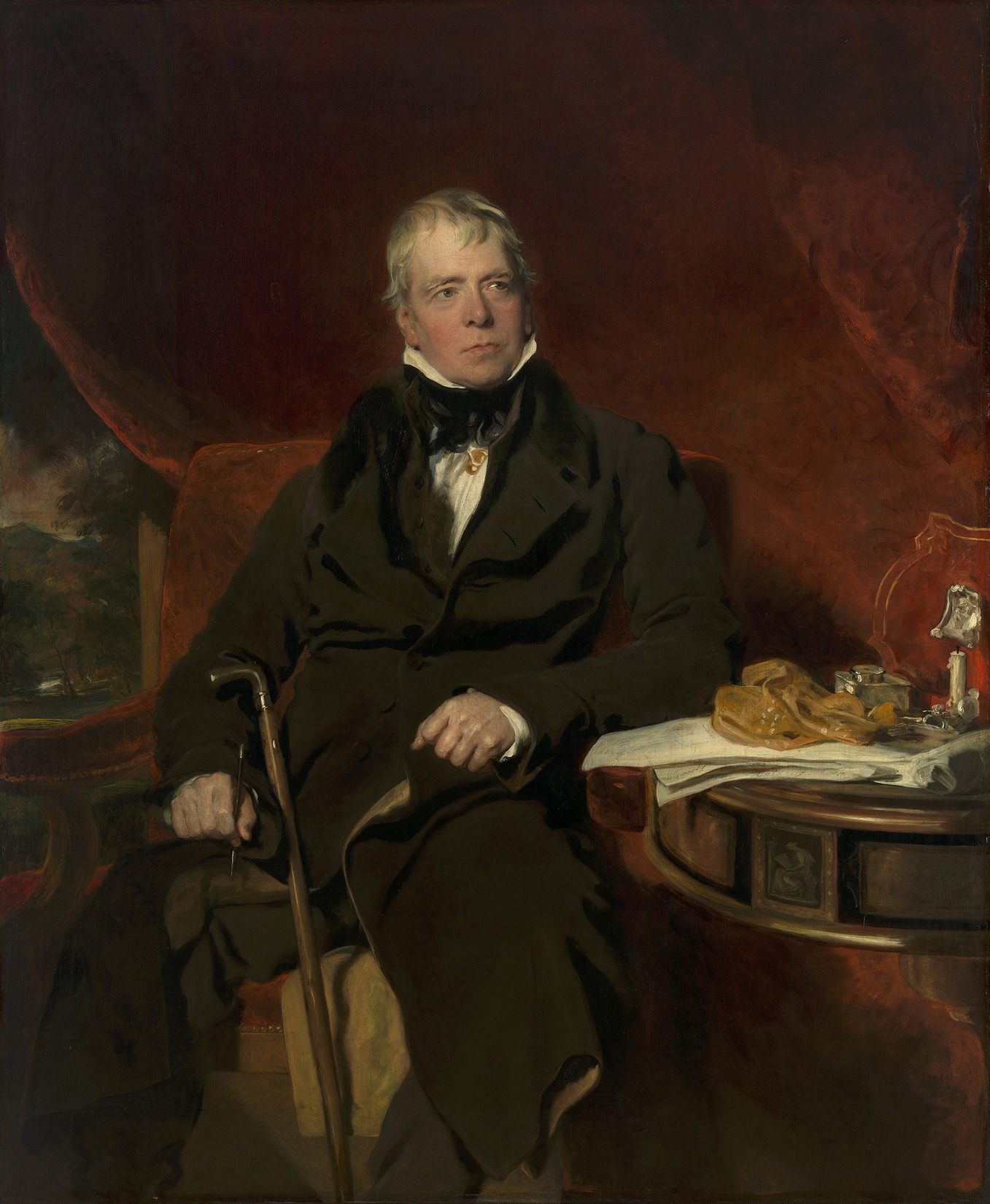
Sir Walter Scott, born on August 15, 1771, in Edinburgh, Scotland, is one of the most influential figures in Western literature, particularly known for pioneering the historical novel. A prolific writer, poet, and editor, Scott’s works have left an indelible mark on literature, shaping the genre of historical fiction and establishing him as the preeminent literary figure of his time. His life, marked by early struggles with illness, a deep connection to Scotland’s cultural heritage, and an extraordinary literary career, offers a fascinating insight into the mind of a man who brought history to life through his novels.
Early Life and Education: Shaping a Literary Genius
Walter Scott was born into a well-off family, though not of aristocratic lineage. His father, also named Walter Scott, was a lawyer with a strong interest in history and theology, while his mother, Anne Rutherford, was the daughter of a professor of medicine at the University of Edinburgh. These intellectual roots played a significant role in Scott’s upbringing and future career.
At just one year old, Scott contracted polio, a disease that left him with a permanent limp. To aid his recovery, his family sent him to live in the Scottish Borders, a region rich in history and folklore. This period was crucial in Scott’s development, as he absorbed the local tales and legends that would later influence his writing. The rural setting of the Borders, with its connection to Scotland’s medieval past, deeply impacted Scott’s imagination, planting the seeds for his future literary works.
In 1775, Scott returned to Edinburgh, where he continued his education. His formal studies began at the Royal High School in 1779, and he later attended the University of Edinburgh to study law, following in his father’s footsteps. However, Scott’s interests extended far beyond legal studies. He was an avid reader, particularly drawn to history, mythology, and literature, and he began to explore these interests with a passion that would eventually define his career.
Early Literary Efforts and Legal Career
Although Scott initially pursued a career in law, his passion for literature never waned. After completing his studies, he worked as an apprentice in his father’s law firm and later became a practicing lawyer. During this time, Scott’s literary interests continued to grow, particularly his fascination with the traditional ballads and stories of Scotland. He began collecting and translating German and Scottish ballads, a task that combined his love for history with his literary aspirations.
Scott’s first significant literary effort came with the publication of “The Minstrelsy of the Scottish Border” in 1802-1803, a collection of traditional Scottish ballads. This work was well-received and established Scott as a serious scholar and writer. His deep respect for Scotland’s cultural heritage and his ability to weave historical elements into compelling narratives became hallmarks of his style.
By the late 1790s, Scott had also begun writing original poetry, drawing on the historical themes that fascinated him. His first major success as a poet came with the publication of “The Lay of the Last Minstrel” in 1805, a narrative poem set in the Scottish Borders. This poem, and the ones that followed, such as “Marmion” (1808) and “The Lady of the Lake” (1810), cemented Scott’s reputation as a leading poet of his time.
The Birth of the Historical Novel: “Waverley” and Beyond
Walter Scott’s literary career took a monumental turn with the publication of “Waverley” in 1814. Although Scott had already achieved fame as a poet, it was his foray into novel-writing that would truly define his legacy. “Waverley” is widely regarded as the first historical novel, a genre that Scott essentially invented. The novel, set during the Jacobite uprising of 1745, was a blend of fiction and historical fact, presenting a romanticized yet accurate portrayal of Scotland’s past.
The success of “Waverley” was immediate and overwhelming. Readers were captivated by Scott’s ability to bring history to life through rich characterizations and vivid descriptions of historical events. The novel’s success spurred Scott to write more historical fiction, leading to a prolific period in his career. Over the next several years, Scott published numerous novels, each set against the backdrop of significant historical events.
Some of Scott’s most notable historical novels include:
- “Guy Mannering” (1815): A tale of mystery and adventure set in the Scottish Borders, showcasing Scott’s deep knowledge of the region’s folklore and traditions.
- “The Antiquary” (1816): A novel exploring the relationship between past and present, centered around an antiquarian’s quest to uncover historical relics.
- “The Heart of Midlothian” (1818): A powerful story of loyalty and justice, set during the Porteous Riots in Edinburgh.
- “Ivanhoe” (1820): Perhaps Scott’s most famous novel, “Ivanhoe” is set in 12th-century England and explores themes of chivalry, heroism, and the conflict between the Saxons and Normans. It remains one of the most popular works of historical fiction ever written.
Scott’s novels were groundbreaking not only for their historical accuracy but also for their exploration of social and political themes. His works often reflected the tensions between different cultural and national identities, particularly the complex relationship between Scotland and England. Through his novels, Scott contributed to a growing sense of Scottish national identity, even as he achieved widespread popularity across the British Isles and beyond.
Financial Struggles and Literary Productivity
Despite his literary success, Walter Scott’s life was not without challenges. In 1804, he became a partner in a printing and publishing business with his brothers-in-law, the Ballantynes. Initially, the venture was profitable, but by 1813, the company faced severe financial difficulties, leading to its eventual collapse.
The financial strain forced Scott to intensify his literary output to pay off the debts incurred by the failed business. Remarkably, this period of financial pressure coincided with some of his most productive years as a writer. Scott’s ability to produce high-quality work under such circumstances is a testament to his resilience and dedication.
One of the most significant works produced during this time was “Ivanhoe,” which not only solidified Scott’s reputation as a master of historical fiction but also helped alleviate some of his financial burdens. The novel’s success was followed by a string of other popular works, including “Kenilworth” (1821), “Quentin Durward” (1823), and “Redgauntlet” (1824). Each of these novels continued to explore the historical and cultural complexities that fascinated Scott, further establishing him as a leading figure in the literary world.
Later Life and Legacy
In 1820, Walter Scott was made a baronet, becoming Sir Walter Scott, in recognition of his contributions to literature and his influence on British culture. However, his financial troubles were far from over. In 1826, the publishing house of Archibald Constable, with which Scott had been closely associated, went bankrupt, leaving Scott with enormous debts.
Undeterred, Scott threw himself into his work, determined to write his way out of debt. His later novels, including “Woodstock” (1826) and “The Chronicles of the Canongate” (1827), were written during this period of intense productivity. Despite his efforts, Scott’s health began to decline, and the physical and mental toll of his financial struggles became increasingly apparent.
In 1827, Scott also published a massive biography of Napoleon Bonaparte, another significant work that demonstrated his breadth of historical knowledge and narrative skill. However, by this time, Scott’s health had deteriorated significantly, and he was forced to slow down his writing.
Walter Scott died on September 21, 1832, at his beloved home, Abbotsford, which he had built with the profits from his literary successes. He was 61 years old. Scott’s death marked the end of an era in British literature, but his influence would continue to resonate for generations.
The Historical Novel: Scott’s Enduring Legacy
Walter Scott’s legacy as the father of the historical novel is indisputable. He transformed the way history was perceived and presented in literature, blending fact with fiction in a way that made the past accessible and engaging to readers. His novels are not just stories set in the past; they are explorations of the forces that shape history—political, social, and cultural—and the ways in which these forces impact individuals and societies.
Scott’s influence can be seen in the works of countless later writers, including Charles Dickens, William Makepeace Thackeray, and Honoré de Balzac. In Italy, Alessandro Manzoni was inspired by Scott’s work when writing “The Betrothed,” a novel that is often considered the greatest Italian historical novel.
Beyond literature, Scott’s impact on Scottish culture and identity is profound. He is often credited with helping to shape the modern perception of Scotland, both within the country and abroad. His romanticized portrayal of Scotland’s history and landscapes played a key role in the development of Scottish tourism, and his works remain closely associated with the country’s national identity.
Conclusion: Walter Scott’s Lasting Impact
Sir Walter Scott’s life and work are a testament to the power of literature to shape not only individual minds but also national identities. Through his novels, Scott brought history to life, creating a genre that has continued to thrive long after his death. His ability to weave historical detail into compelling narratives set a standard for historical fiction that remains influential to this day.
Scott’s life was marked by both triumph and adversity, and his determination to continue writing in the face of financial and personal challenges is a testament to his resilience. As the father of the historical novel, Scott’s contributions to literature are immeasurable, and his works continue to be read and celebrated around the world.
In the annals of literary history, Walter Scott stands as a towering figure, a writer whose works have transcended the boundaries of time and place to become part of the global literary canon. His legacy is one of innovation, imagination, and an enduring love for the rich tapestry of history.


