
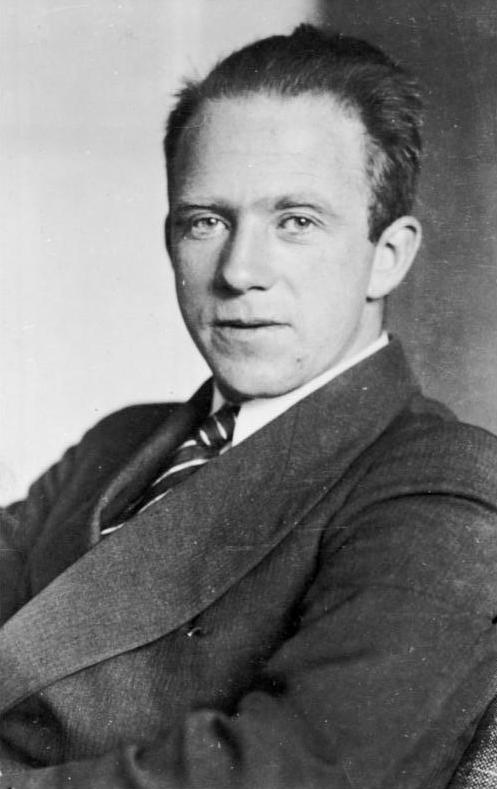
Werner Karl Heisenberg, born on December 5, 1901, in Würzburg, Germany, stands as one of the most pivotal figures in the history of physics. His contributions to quantum mechanics, particularly the formulation of the Uncertainty Principle, have left an indelible mark on both the scientific community and the broader understanding of the natural world. This article delves into Heisenberg’s life, his rise to prominence, and the highlights of his career, providing a comprehensive overview of one of the most influential physicists of the 20th century.
Early Life and Education
Werner Heisenberg’s early life was marked by a profound interest in science and mathematics. Born into an academic family—his father was a professor of medieval and modern Greek—Heisenberg was exposed to intellectual pursuits from a young age. His upbringing in the culturally rich environment of Munich, where his family moved shortly after his birth, played a significant role in shaping his intellectual curiosity.
Heisenberg attended the prestigious Maximilians-Gymnasium in Munich, where he excelled in his studies, particularly in mathematics and physics. His passion for these subjects led him to the University of Munich in 1920, where he studied under Arnold Sommerfeld, a prominent theoretical physicist. Sommerfeld’s influence on Heisenberg was profound, as he introduced the young physicist to the cutting-edge problems of quantum theory.
After completing his undergraduate studies, Heisenberg pursued his doctoral degree under Sommerfeld’s guidance. In 1923, he submitted his dissertation on the topic of turbulence in fluid flows, a subject that showcased his mathematical prowess and laid the groundwork for his future contributions to physics.
Academic Career and Quantum Mechanics
Following the completion of his doctorate, Heisenberg moved to the University of Göttingen, where he worked with Max Born, another leading figure in the field of quantum mechanics. It was during his time at Göttingen that Heisenberg began to develop the ideas that would eventually lead to his formulation of matrix mechanics, a revolutionary approach to quantum theory.
In 1924, Heisenberg traveled to Copenhagen to work with Niels Bohr, a towering figure in the world of physics and a key mentor to Heisenberg. Bohr’s lectures on quantum theory profoundly influenced Heisenberg, and it was under Bohr’s mentorship that Heisenberg began to refine his ideas on quantum mechanics.
By 1925, Heisenberg had developed the first version of quantum mechanics, known as matrix mechanics. This formulation was revolutionary in that it abandoned the classical concepts of particles and waves, instead focusing on the probabilities of various outcomes. Heisenberg’s approach was mathematically rigorous, utilizing matrices to describe the probabilities of different quantum states. This work marked a significant departure from classical mechanics and laid the foundation for the modern understanding of quantum theory.
The Uncertainty Principle
Heisenberg’s most famous contribution to physics came in 1927 with the formulation of the Uncertainty Principle. This principle, which states that the position and momentum of a particle cannot both be precisely measured at the same time, challenged the very foundations of classical physics. The Uncertainty Principle has profound implications for our understanding of the physical world, suggesting that at the quantum level, nature is inherently probabilistic rather than deterministic.
The Uncertainty Principle quickly became a cornerstone of quantum mechanics, influencing not only the development of physics but also philosophical discussions about the nature of reality. Heisenberg’s work was recognized with the Nobel Prize in Physics in 1932, cementing his status as one of the leading physicists of his time.
The Kaiser Wilhelm Institute and World War II
In 1927, at the young age of 26, Heisenberg was appointed to a professorship at the University of Leipzig. This was a remarkable achievement, as it made him one of the youngest full professors in Germany. However, his career took a significant turn in 1941 when he was appointed director of the Kaiser Wilhelm Institute for Physics in Berlin.
During World War II, Heisenberg became involved in the German nuclear weapon project, known as the Uranverein (Uranium Club). The goal of this project was to develop nuclear weapons for Nazi Germany, but it ultimately did not succeed. The reasons for this failure have been the subject of much debate. Some historians suggest that Heisenberg and his team lacked the necessary resources and support from the Nazi regime, while others speculate that Heisenberg may have deliberately slowed the project, either out of moral reservations or because of the insurmountable technical challenges.
Heisenberg’s involvement in the Uranverein has been a controversial aspect of his legacy. After the war, he defended his actions by arguing that he was primarily focused on nuclear reactor research rather than weapon development. Nevertheless, his wartime activities have raised questions about the ethical responsibilities of scientists working in times of conflict.
Post-War Career and Contributions to Physics
After World War II, Heisenberg, along with other prominent German scientists, was detained by the Allies in Operation Epsilon. This operation involved the internment of German scientists at Farm Hall in England, where they were monitored and interrogated about their involvement in the Nazi nuclear program. Heisenberg was eventually released and returned to Germany in 1946.
Upon his return, Heisenberg played a crucial role in rebuilding German science. He was appointed director of the newly established Max Planck Institute for Physics and Astrophysics in Göttingen, a position he held until 1958 when the institute moved to Munich. Under his leadership, the institute became a leading center for research in physics, and Heisenberg continued to make significant contributions to the field.
In addition to his work in quantum mechanics, Heisenberg became increasingly interested in the philosophical implications of modern physics. He authored several influential books, including Physics and Philosophy (1962) and Physics and Beyond (1971), in which he explored the relationship between scientific theories and the nature of reality. These works reflect Heisenberg’s deep engagement with the philosophical questions raised by quantum mechanics and his belief in the importance of a holistic understanding of science.
Legacy and Impact
Werner Heisenberg’s contributions to physics and his broader influence on science and philosophy cannot be overstated. His work on quantum mechanics, particularly the Uncertainty Principle, has had a lasting impact on the way scientists understand the universe. The principles he developed continue to be fundamental to both theoretical and experimental physics, influencing research in fields as diverse as quantum computing, particle physics, and cosmology.
Heisenberg’s legacy extends beyond his scientific achievements. His involvement in the German nuclear program during World War II has sparked ongoing debates about the ethical responsibilities of scientists. His post-war efforts to rebuild German science and his philosophical writings have also left a lasting mark on the scientific community.
In recognition of his contributions to science, Heisenberg received numerous honors and awards throughout his life. In addition to the Nobel Prize, he was awarded the Max Planck Medal, the Franklin Medal, and honorary doctorates from several universities. He also served as president of the Alexander von Humboldt Foundation, where he worked to promote scientific exchange and collaboration between Germany and other countries.
Conclusion
Werner Karl Heisenberg was a towering figure in the history of physics, whose work reshaped our understanding of the quantum world. From his early days as a brilliant student in Munich to his groundbreaking contributions to quantum mechanics, Heisenberg’s career was marked by a relentless pursuit of knowledge and a deep commitment to exploring the fundamental questions of science.
His formulation of the Uncertainty Principle revolutionized physics and challenged the deterministic worldview that had dominated science for centuries. While his involvement in the German nuclear program remains a controversial aspect of his legacy, Heisenberg’s contributions to science and philosophy have left an indelible mark on the world.
Heisenberg’s life and work serve as a reminder of the power of human curiosity and the importance of ethical considerations in scientific research. His legacy continues to inspire physicists, philosophers, and thinkers around the world, as they grapple with the profound questions that Heisenberg so boldly addressed in his own time.


