
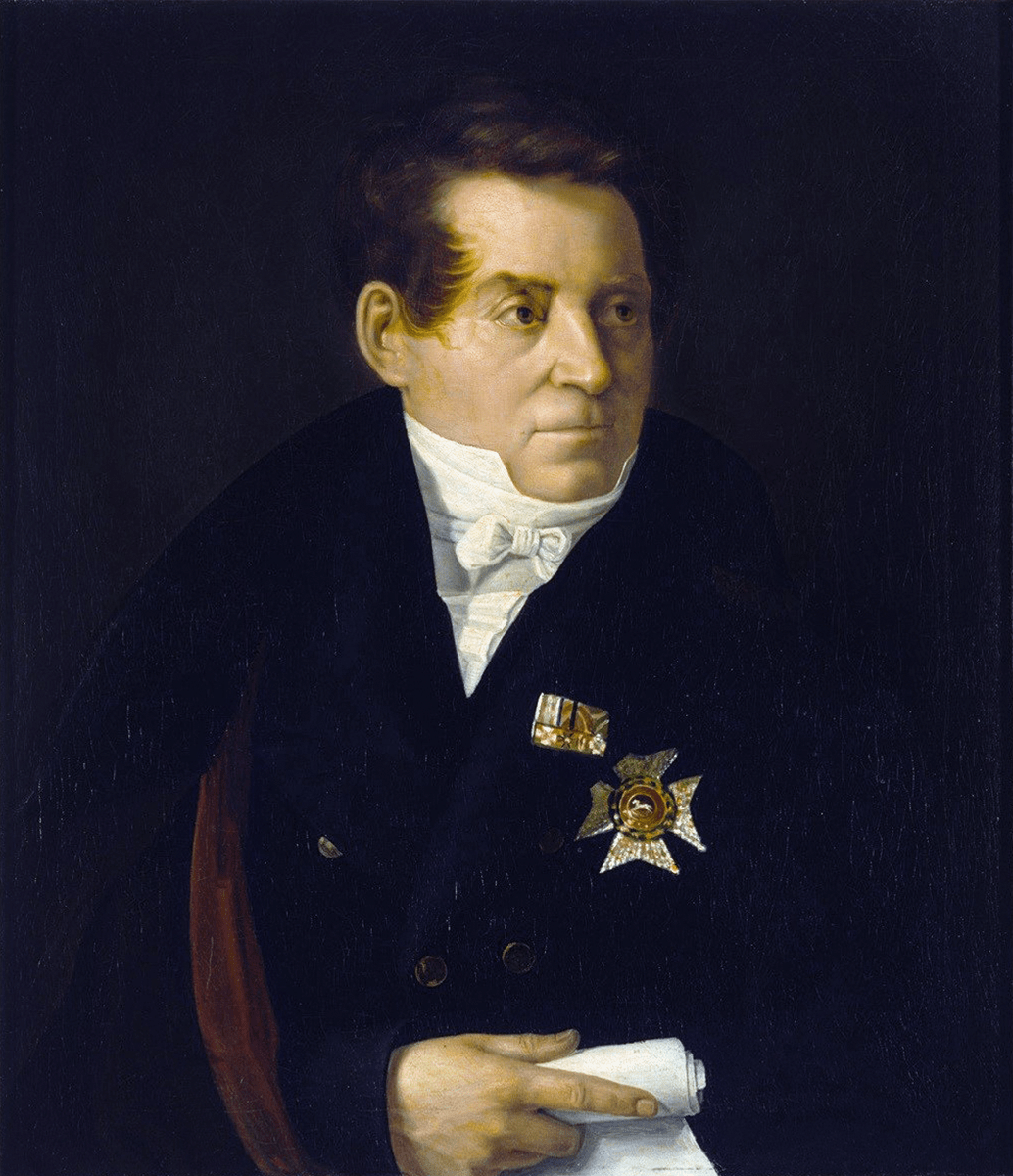
Wilhelm August von Schlegel, born on September 8, 1767, in Hannover, Lower Saxony, is a towering figure in the landscape of German Romanticism. A poet, translator, critic, and scholar, Schlegel’s work laid the foundation for the Romantic movement, profoundly influencing literature, philosophy, and the arts in Europe. His intellectual pursuits spanned various disciplines, from philology to oriental studies, and his contributions have left an indelible mark on the cultural history of the Western world. This article delves into the life, fame, and key highlights of Wilhelm August von Schlegel, exploring his influence on Romanticism, his scholarly achievements, and his enduring legacy.
Early Life and Education
Born into a family of distinguished intellectuals, Wilhelm August von Schlegel was immersed in a world of learning from a young age. His father, Johann Adolf Schlegel, was a prominent theologian and hymn writer, while his brother, Friedrich Schlegel, would also become a significant figure in the Romantic movement. The intellectual environment in which Wilhelm grew up fostered his early interest in literature, philosophy, and the arts.
Schlegel pursued his education at the University of Göttingen, where he studied philology, aesthetics, and theology. During his time at Göttingen, he became associated with the Sturm und Drang movement, a precursor to German Romanticism. This literary and cultural movement, characterized by its emphasis on individualism and emotional expression, greatly influenced Schlegel’s thinking and later work. Among his early influences were the works of Johann Wolfgang von Goethe and Friedrich Schiller, both central figures in the Sturm und Drang movement.
The Birth of Romanticism and the Athenaeum
Wilhelm August von Schlegel’s contributions to the Romantic movement are monumental. Alongside his brother Friedrich, Wilhelm played a pivotal role in shaping the intellectual and artistic foundations of Romanticism. In 1798, the Schlegel brothers founded the journal Athenaeum, which became the official voice of the Romantic movement. The journal published essays, critiques, and literary works that championed the ideals of Romanticism, such as the celebration of emotion, nature, and the sublime, as well as a deep interest in history and mythology.
The Athenaeum was instrumental in promoting the works of key Romantic figures, including Novalis, Ludwig Tieck, and Friedrich Wilhelm Joseph Schelling. It also provided a platform for the Schlegel brothers to articulate their vision of Romanticism as a new, dynamic force in European culture. Wilhelm’s essays in the Athenaeum showcased his brilliant literary criticism, which combined deep erudition with a poetic sensibility. His writings emphasized the importance of imagination and creativity in literature, and he advocated for a synthesis of classical and Romantic elements in art.
Literary Criticism and Scholarly Work
Wilhelm August von Schlegel’s reputation as a literary critic and scholar was firmly established by the early 19th century. His lectures on literature and the fine arts, delivered in Berlin in 1801 and later in Vienna in 1808, were highly influential. These lectures, later published as “Lectures on Dramatic Art and Literature”, were translated into multiple languages and widely read across Europe. In these works, Schlegel offered a comprehensive analysis of European literature, from ancient Greek drama to contemporary plays, and provided a Romantic reinterpretation of literary history.
One of Schlegel’s most significant contributions to literary criticism was his advocacy for Shakespeare as the greatest dramatist of all time. At a time when Shakespeare’s works were still not universally recognized as literary masterpieces, Schlegel’s translations and critiques played a crucial role in elevating Shakespeare’s status in the German-speaking world. Schlegel’s translations of Shakespeare’s plays, some of which were done in collaboration with his wife, Caroline Michaelis, remain highly regarded for their poetic fidelity and linguistic elegance.
In addition to his work on Shakespeare, Schlegel made significant contributions to the study of Dante Alighieri’s Divine Comedy. His partial translation of the Divine Comedy into German, along with his critical essays on Dante’s work, helped to reintroduce the Italian poet to a German audience and positioned Dante as a central figure in the Romantic literary canon.
Collaboration with Madame de Staël and European Influence
Wilhelm August von Schlegel’s influence extended far beyond Germany, thanks in part to his collaboration with the French writer and intellectual Madame de Staël. The two met in the early 1800s, and their intellectual partnership soon blossomed into a romantic relationship. Schlegel became Madame de Staël’s literary advisor and accompanied her on travels across Europe, where they engaged with leading cultural and political figures of the time.
Madame de Staël’s seminal work “De l’Allemagne” (1810), which introduced German Romanticism to French readers, was heavily influenced by Schlegel’s ideas and writings. In this work, Madame de Staël presented Germany as a land of deep spirituality and profound artistic expression, contrasting it with the rationalism and materialism of French culture. Schlegel’s insights into German literature, philosophy, and aesthetics were instrumental in shaping the book’s content and message.
Schlegel’s travels with Madame de Staël also allowed him to spread Romantic ideas across Europe. His lectures in various cities, including Paris, Berlin, and Vienna, attracted large audiences and helped to popularize Romanticism as a pan-European movement. Through his writings, translations, and lectures, Schlegel played a key role in forging cultural connections between Germany, France, and other European nations.
Later Years and Oriental Studies
In his later years, Wilhelm August von Schlegel turned his scholarly attention to the study of Oriental languages and literature, particularly Sanskrit. His interest in Eastern cultures was part of a broader Romantic fascination with the exotic and the mystical. Schlegel’s work in this field was pioneering, and he is credited with laying the foundations for the study of Indian literature and philosophy in Germany.
In 1823, Schlegel published a German translation of the Bhagavad Gita, one of the most important texts in Hindu philosophy. This was followed by his translation of the Ramayana in 1829. These works introduced German readers to the rich spiritual and literary traditions of India, and they had a profound impact on German Romanticism, which increasingly looked to Eastern thought for inspiration.
Schlegel’s contributions to Oriental studies were not limited to translations. He also founded the journal Indische Bibliothek (Indian Library), which published scholarly articles on Indian literature, religion, and philosophy. His work in this field earned him recognition as one of the founders of Indology in Germany.
In 1818, Schlegel was appointed to the chair of Art History and Literature at the University of Bonn, where he continued to teach and publish on a wide range of subjects. His later publications include “On the Theory and History of the Plastic Arts” (1827) and “Critical Writings” (1828), which reflected his continued engagement with both Western and Eastern traditions.
Personal Life and Relationships
Wilhelm August von Schlegel’s personal life was marked by both intellectual partnerships and personal tragedies. His first marriage to Caroline Michaelis ended in divorce after she left him for the philosopher Friedrich Wilhelm Joseph Schelling. Despite this personal setback, Schlegel remained close to many of his contemporaries and continued to collaborate with other intellectuals and artists throughout his life.
After the death of Madame de Staël in 1817, Schlegel married Sophie Paulus Heidelberg, though the marriage was short-lived. Schlegel’s later years were largely devoted to his scholarly pursuits, and he remained active in academic circles until his death in 1845.
Schlegel’s personal relationships, particularly his collaborations with his brother Friedrich and Madame de Staël, were integral to his intellectual development. These relationships not only shaped his thinking but also allowed him to exert a wide-ranging influence on European culture.
Historical Context and Reception
Wilhelm August von Schlegel lived during a period of profound cultural and intellectual transformation in Europe. The late 18th and early 19th centuries were marked by the decline of Enlightenment rationalism and the rise of Romanticism, a movement that sought to reclaim the emotional, spiritual, and imaginative aspects of human experience.
Schlegel was at the forefront of this cultural shift, and his work helped to define the key tenets of Romanticism. His emphasis on the importance of emotion, the sublime, and the integration of classical and Romantic elements in art resonated with the broader Romantic movement. Schlegel’s work also reflected the Romantic fascination with history, mythology, and the supernatural, themes that were central to the literature and art of the time.
Despite his significant contributions to literature and criticism, Schlegel’s legacy has been somewhat overshadowed by other Romantic figures, such as Goethe and Friedrich Schiller. However, his work remains an essential part of the intellectual history of the period, and his influence on both German and European culture is undeniable.
Schlegel’s Relevance Today
Wilhelm August von Schlegel’s work continues to be relevant in contemporary discussions about literature, art, and cultural history. His contributions to literary criticism, particularly his championing of Shakespeare and his reinterpretation of Dante, remain foundational to the study of these authors. Schlegel’s translations are still studied for their linguistic skill and poetic sensitivity, and his essays on Romanticism continue to be read for their insights into the movement’s ideals and aspirations.
Moreover, Schlegel’s engagement with Oriental studies has left a lasting impact on the field of Indology and the study of Eastern philosophy in the West. His translations of Sanskrit texts introduced European readers to new ways of thinking about spirituality and the human condition, and they continue to be valued for their scholarly rigor and cultural significance.
In a broader sense, Schlegel’s work embodies the Romantic spirit of exploration, creativity, and the quest for deeper meaning in art and life. His legacy is one of intellectual curiosity, cross-cultural dialogue, and a commitment to understanding the complexities of human experience. As such, Wilhelm August von Schlegel remains a pivotal figure in the history of European thought, and his work continues to inspire and challenge scholars, artists, and readers alike.
Conclusion
Wilhelm August von Schlegel’s life and work represent a remarkable fusion of literary criticism, translation, and scholarship. As a leading figure in the Romantic movement, Schlegel helped to shape the cultural landscape of Europe, introducing new ideas and perspectives that continue to resonate today. His contributions to the study of literature, both Western and Eastern, have left an enduring legacy that extends far beyond his own time. Schlegel’s work challenges us to think critically about the role of art and literature in shaping our understanding of the world, and his legacy as a scholar and critic remains as relevant today as it was during his lifetime.


