
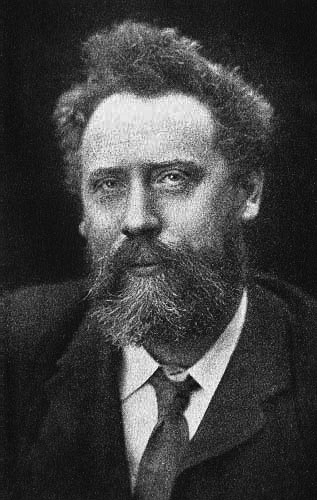
William Ernest Henley, a name synonymous with resilience, courage, and poetic brilliance, was born on August 23, 1849, in Gloucester, England. As the eldest of six children in a family with strong literary connections—his mother, Mary Morgan, being a descendant of the poet and critic Joseph Warton—Henley’s life was set on a path that would see him become one of the most influential poets of his time. His journey was marked by significant challenges, yet his indomitable spirit led him to create works that continue to resonate today.
Early Life and Education: The Foundation of a Poet
Henley’s early education took place at Crypt Grammar School in Gloucester, where he studied from 1861 to 1867. It was during this time that Henley was deeply influenced by Thomas Edward Brown, the school’s headmaster from 1857 to 1863. Brown’s impact on Henley was profound, sparking a lifelong friendship and leaving an indelible mark on his literary sensibilities. Henley would later reflect on this relationship in a memorial published in the New Review in December 1897, highlighting the admiration and respect he held for Brown.
The Struggle with Illness: A Testament to Resilience
At the age of twelve, Henley’s life took a dramatic turn when he was diagnosed with tuberculosis, a disease that would plague him for the rest of his life. The severity of the illness led to the amputation of his left leg below the knee. This experience, which could have easily broken his spirit, instead became a source of inspiration and strength.
Henley’s battle with tuberculosis was relentless. His right foot was also at risk of amputation, but Henley, determined to avoid another operation, sought the care of Joseph Lister, a pioneering surgeon at The Royal Infirmary of Edinburgh. Lister’s innovative techniques in antiseptic surgery, though not entirely successful in curing Henley, allowed him to live independently for another thirty years. It was during one of his prolonged stays in the hospital that Henley composed his most famous poem, Invictus.
“Invictus”: The Unconquerable Soul
Invictus, written in 1875, remains one of the most iconic poems in the English language. The title, derived from the Latin word for “unconquered,” perfectly encapsulates the essence of the poem and Henley’s own life. The poem’s enduring appeal lies in its powerful message of resilience in the face of adversity—a theme that resonated deeply with Henley’s personal experiences.
The poem gained further cultural significance in the 20th and 21st centuries, particularly in 2009 when it was featured in Clint Eastwood’s film Invictus. The film, which tells the story of Nelson Mandela’s efforts to unite South Africa through the 1995 Rugby World Cup, portrays Mandela (played by Morgan Freeman) using Henley’s poem as a source of inspiration during his 27 years of imprisonment. The line, “I am the master of my fate, I am the captain of my soul,” has since become a mantra for countless individuals facing their own struggles.
Literary Contributions: Beyond “Invictus”
While Invictus is undoubtedly Henley’s most famous work, his literary contributions extend far beyond this single poem. Henley’s oeuvre includes several notable collections of poetry and essays that reflect his versatility and depth as a writer.
In 1888, Henley published A Book of Verses, a collection that showcases his ability to capture the human experience in all its complexity. This was followed by Views and Reviews in 1890, a series of critical essays that highlight Henley’s sharp intellect and his engagement with contemporary literary and cultural issues.
Another significant work is The Song of the Sword (1892), later retitled London Voluntaries in its second edition in 1893. This collection of poems reflects Henley’s fascination with the energy and vibrancy of London, capturing the spirit of the city in a way that few poets have matched.
Henley’s literary legacy is also closely tied to his friendship with Robert Louis Stevenson, the author of Treasure Island. Stevenson is said to have based the character of Long John Silver, the infamous pirate, on Henley. This connection is further supported by Stevenson’s stepson, Lloyd Osbourne, who described Henley as a “large, red-bearded man with a crutch, jovial, astoundingly clever, and with a laugh that boomed like music.”
Personal Life and Relationships: The Man Behind the Poems
Henley’s personal life was as complex and storied as his literary career. Despite his physical ailments, Henley possessed an indomitable spirit and a zest for life that drew many into his circle. His marriage to Anna Boyle in 1878 marked a significant chapter in his life, and the couple had one daughter, Margaret Emma Henley, who tragically died at the age of five. Margaret’s life and death had a profound impact on Henley, and she became the inspiration for the character of Wendy in J.M. Barrie’s Peter Pan.
Henley’s friendship with Robert Louis Stevenson was one of the most significant relationships in his life. The two men shared a deep intellectual bond, and their correspondence reveals a mutual respect and admiration for each other’s work. Stevenson’s portrayal of Henley as Long John Silver is a testament to the larger-than-life presence Henley had, despite his physical limitations.
The Later Years: Legacy and Death
William Ernest Henley continued to write and engage with the literary world until his death on July 11, 1903. His later years were marked by a sense of accomplishment, but also by the continued struggle with his health. Nevertheless, Henley’s influence on English literature, particularly through his poetry and his critical essays, remains significant.
Henley’s legacy is perhaps best encapsulated in his refusal to be defined by his circumstances. His life and work serve as a powerful reminder of the strength of the human spirit and the capacity for art to transcend personal suffering.
Historical Context and Cultural Impact
To fully appreciate William Ernest Henley’s contributions, it is essential to consider the broader historical and cultural context in which he lived and wrote. The late 19th century was a period of significant change in England, marked by industrialization, the expansion of the British Empire, and social upheaval. Henley’s work reflects these tensions, particularly in his portrayal of London as a dynamic and sometimes overwhelming force.
Henley’s poetry also resonates with the Victorian ideals of stoicism and resilience. In an era where personal hardship was often met with a stiff upper lip, Henley’s Invictus became a beacon for those who sought strength in the face of adversity. His emphasis on individual determination and self-mastery aligns with the broader cultural trends of the time, making his work both a product of and a response to the society in which he lived.
The continued relevance of Henley’s work in the 21st century speaks to its universal themes. Invictus in particular has been embraced by various movements and individuals seeking empowerment and inspiration. The poem’s association with figures like Nelson Mandela has further cemented its place in the cultural consciousness, ensuring that Henley’s voice continues to be heard long after his passing.
The Legacy of William Ernest Henley: A Life Unconquered
William Ernest Henley’s life and work offer a profound example of how adversity can be transformed into art. His poetry, particularly Invictus, stands as a testament to the power of the human spirit to overcome even the most daunting challenges. Henley’s refusal to be defined by his illness, his determination to live life on his own terms, and his ability to capture these experiences in verse have left an indelible mark on the literary world.
Henley’s influence extends beyond his own time, inspiring generations of writers, thinkers, and leaders. His legacy is not just in the words he wrote, but in the example he set—a life lived with courage, conviction, and an unwavering belief in the power of the individual.
In conclusion, William Ernest Henley’s story is one of triumph over adversity, a journey that took him from the depths of illness to the heights of literary fame. His work continues to inspire, offering a timeless reminder that, no matter the circumstances, we are all the masters of our fate and the captains of our souls.


