
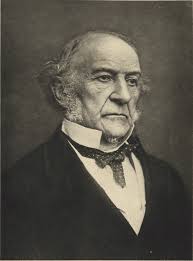
William Ewart Gladstone, born on December 29, 1809, in Liverpool, England, was a towering figure in British politics during the 19th century. Known for his deep convictions, eloquent speeches, and a career that spanned over six decades, Gladstone remains one of the most influential statesmen in British history. His legacy is marked by his contributions to political reform, his advocacy for Irish self-governance, and his role in shaping the economic policies of Victorian Britain. This article provides a comprehensive overview of Gladstone’s life, highlighting his age, rise to fame, and the significant milestones that defined his career.
Early Life and Education
William Ewart Gladstone was born into a wealthy merchant family in Liverpool. His father, John Gladstone, was a successful businessman and a prominent figure in the city. William was the fourth of six children and was raised in an environment that valued education and public service. He was sent to Eton College, one of England’s most prestigious schools, where he excelled academically and developed a strong interest in classical studies and oratory.
After Eton, Gladstone went on to study at Christ Church, Oxford, where he further honed his skills in rhetoric and debate. It was during his time at Oxford that Gladstone became deeply religious, a commitment that would influence his political career. He graduated with a double first in Classics and Mathematics in 1831, setting the stage for his entry into public life.
Entry into Politics and Early Career
Gladstone’s political career began in 1832 when he was elected as the Member of Parliament (MP) for Newark, representing the Tory party. At the time, the Tories were the conservative party in Britain, and Gladstone’s early political views were shaped by his support for the Anglican Church and traditional social hierarchies. His eloquence and intelligence quickly caught the attention of senior party members, and he was appointed as a junior lord of the Treasury in 1834 by Prime Minister Sir Robert Peel.
Gladstone’s early career was marked by his adherence to conservative principles, but he soon began to show signs of the reformist tendencies that would later define his political philosophy. His tenure as the Under-Secretary of State for War and the Colonies from 1835 to 1839 provided him with valuable experience in government administration and foreign policy, laying the groundwork for his future leadership roles.
The Naples Affair and Shift Toward Liberalism
A pivotal moment in Gladstone’s career occurred in the early 1850s, when he visited Naples and witnessed firsthand the repressive measures employed by the Bourbon monarchy. Shocked by the injustices he observed, Gladstone penned two influential letters to Lord Aberdeen, known as the “Letters to the Earl of Aberdeen on the State Prosecutions of the Neapolitan Government.” In these letters, he condemned the Bourbon regime’s actions as a “negation of God” and called for international intervention.
While the letters were controversial and led to some backlash, they also marked a significant turning point in Gladstone’s political development. The experience in Naples led him to embrace a more liberal outlook, advocating for political and social reforms both in Britain and abroad. His growing disillusionment with conservative policies, particularly those that supported authoritarian regimes, pushed him toward the Liberal Party.
Chancellor of the Exchequer: Economic Reforms and Free Trade
In 1852, Gladstone was appointed Chancellor of the Exchequer under Lord Aberdeen’s coalition government. This position marked the beginning of Gladstone’s long and influential tenure as Britain’s chief financial officer. During his time as Chancellor, Gladstone implemented a series of significant economic reforms that aimed to modernize the British economy and promote free trade.
One of his most notable achievements was the reduction of tariffs and taxes, which he believed would stimulate economic growth and increase government revenue. Gladstone’s budgets were characterized by his commitment to fiscal responsibility, and he worked to reduce the national debt while also lowering the burden on taxpayers. His approach to economic policy was grounded in the principles of classical liberalism, which emphasized limited government intervention, free markets, and individual liberty.
Gladstone’s economic policies were widely praised, and he became known as the “People’s William” for his efforts to make government finances more transparent and accountable to the public. His success as Chancellor solidified his reputation as a skilled and principled statesman, paving the way for his later rise to the highest office in the land.
First Term as Prime Minister: Reforms and Challenges
Gladstone’s first term as Prime Minister began in 1868, following his succession to the leadership of the Liberal Party. His administration was marked by an ambitious agenda of political and social reforms, many of which aimed to address the inequalities and injustices that had become entrenched in British society.
One of Gladstone’s most significant achievements during this period was the disestablishment of the Anglican Church in Ireland through the Irish Church Act of 1869. This controversial measure ended the privileged status of the Church of Ireland, which was seen as an instrument of English domination in a predominantly Catholic country. The act was a major step toward addressing the grievances of the Irish people and set the stage for further reforms in Ireland.
In addition to his work on Irish issues, Gladstone’s government also passed the Elementary Education Act of 1870, which established the framework for compulsory primary education in England and Wales. This was a landmark achievement in the history of British education, as it laid the foundation for a more equitable and accessible education system.
Gladstone’s first term was not without its challenges. His relationship with Queen Victoria was famously strained, as the monarch preferred his Conservative rival, Benjamin Disraeli. Despite this, Gladstone remained committed to his reformist agenda, though his government was eventually brought down in 1874, leading to his temporary retirement from politics.
The Irish Question and Home Rule
One of the defining issues of Gladstone’s later career was the “Irish Question” and his advocacy for Home Rule, the idea that Ireland should have its own parliament and greater autonomy within the United Kingdom. Gladstone’s conversion to the cause of Irish self-governance was a gradual process, influenced by the growing unrest and violence in Ireland during the 19th century.
By the 1880s, Gladstone had become convinced that the only way to address the Irish problem was through Home Rule. In 1886, during his third term as Prime Minister, he introduced the first Home Rule Bill in Parliament. The bill sought to establish an Irish legislature and grant Ireland control over its domestic affairs while remaining part of the British Empire.
The Home Rule Bill was highly controversial and faced fierce opposition from many quarters, including from within Gladstone’s own party. The bill was ultimately defeated in the House of Commons, leading to the collapse of Gladstone’s government. Despite this setback, Gladstone continued to champion the cause of Irish Home Rule, believing it to be a matter of justice and moral necessity.
Gladstone’s commitment to Home Rule alienated some of his political allies and led to a split in the Liberal Party, with the formation of the Liberal Unionists, who opposed Irish autonomy. Nevertheless, Gladstone remained undeterred, and in 1892, during his fourth and final term as Prime Minister, he introduced a second Home Rule Bill. This time, the bill passed in the House of Commons but was defeated in the House of Lords.
Final Years and Legacy
Gladstone’s final years in politics were marked by his unwavering dedication to the causes he believed in, particularly Irish Home Rule. However, the repeated failures of his Home Rule bills took a toll on his health and political influence. In 1894, at the age of 84, Gladstone resigned as Prime Minister and retired from public life.
William Ewart Gladstone passed away on May 19, 1898, at the age of 88. His death marked the end of an era in British politics, but his legacy lived on. Gladstone is remembered as one of the greatest statesmen in British history, a leader whose vision and reforms helped shape the modern United Kingdom.
His contributions to economic policy, education, and political reform were profound, and his efforts to address the Irish Question, though ultimately unsuccessful in his lifetime, laid the groundwork for future developments in Anglo-Irish relations. Gladstone’s moral integrity, intellectual rigor, and deep commitment to public service continue to inspire politicians and leaders around the world.
Conclusion
William Ewart Gladstone’s life and career were defined by his relentless pursuit of justice, reform, and the betterment of society. From his early days as a conservative MP to his transformation into a champion of liberalism and Irish self-governance, Gladstone’s journey was one of evolution, conviction, and unwavering dedication to his principles. His legacy as a reformer, statesman, and advocate for the underrepresented remains a powerful reminder of the impact that committed and principled leadership can have on a nation.


