
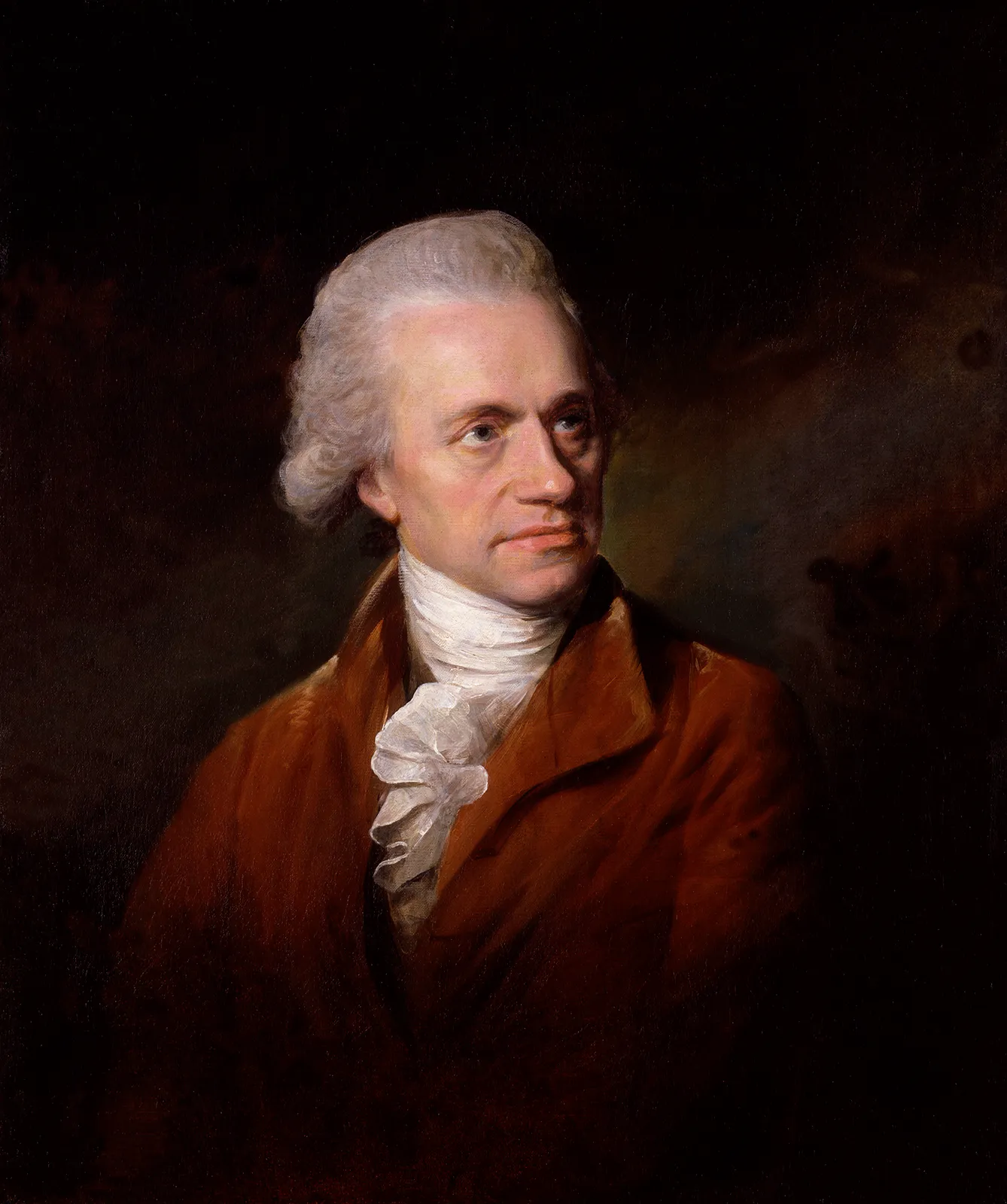
William Herschel, born on November 15, 1738, in Hannover, Germany, is a towering figure in the history of astronomy. His contributions to the field are legendary, marking him as one of the most influential astronomers of all time. Herschel’s life is a fascinating blend of music, science, and discovery, with his journey from a musician to a groundbreaking astronomer reflecting the spirit of the Enlightenment era.
Early Life and Musical Beginnings
Herschel was born into a musical family; his father, Isaac Herschel, was a musician in the Hannoverian military. This musical heritage played a significant role in William’s early life. By the age of fourteen, after completing his education at the garrison school, William joined his father’s band. However, the outbreak of the Seven Years’ War forced Herschel to leave military service, leading him to emigrate to England with his brother Jacob.
In England, Herschel quickly established himself as a skilled musician. He became known as a soloist, proficient in playing the oboe and violin, and also worked as a music teacher. His reputation grew, and he became a respected figure in British musical circles. However, Herschel’s interests were not confined to music alone.
Transition to Astronomy
William Herschel’s journey into astronomy began as a self-taught endeavor. By 1776, he had started constructing his own telescopes. Initially, these were Gregorian telescopes, but he soon shifted to the Newtonian design, which became his preferred model.
The pivotal moment in Herschel’s astronomical career came on March 13, 1781, when he accidentally discovered the planet Uranus. This discovery was made during his survey of the night sky, where he was searching for double stars to measure stellar parallaxes. Herschel initially believed he had found a comet, and he reported his findings to the Bath Philosophical Society and the Royal Society in a paper titled “Account of a Comet.” However, it soon became clear that Herschel had discovered a new planet, making him the first person in history to discover a planet with a telescope.
Recognition and Royal Patronage
Herschel’s discovery of Uranus brought him immediate fame and recognition. In 1782, he was appointed as the “Astronomer of the King” by King George III, a position created specifically for him. This role came with a yearly stipend of 200 pounds and a substantial grant of 2,000 pounds to construct a large reflecting telescope. This telescope, with a primary mirror over a meter in diameter and a focal length of 40 feet, was one of the most powerful instruments of its time.
Herschel moved from Bath to Windsor to be closer to the royal court, initially residing in Datchet and later in Slough. His new position allowed him to dedicate himself fully to astronomy, and he continued to make significant contributions to the field.
Major Discoveries and Contributions
In addition to discovering Uranus, Herschel made several other notable discoveries. In 1787, he observed two of Uranus’s moons, Titania and Oberon. This discovery further demonstrated his exceptional observational skills, as no one else was able to detect these moons for the next 25 years.
Herschel’s work extended beyond the solar system. He was a pioneer in the field of galactography, the study of the structure and distribution of galaxies. In 1784, he conducted a survey of the night sky, dividing it into 683 zones and counting the number of stars in each. His findings revealed that the number of stars was greatest along the plane of the Milky Way and decreased perpendicular to it. Based on his observations, Herschel estimated that the Milky Way contained around 300 million stars and had a diameter of 7,000 light-years and a width of 1,300 light-years. While these numbers are much lower than modern estimates, they were groundbreaking for their time, especially considering the limitations of 18th-century observational technology.
One of Herschel’s most significant contributions to science was his discovery of infrared radiation. In 1800, Herschel conducted an experiment using a glass prism to disperse sunlight into its constituent colors. He placed a thermometer in each color band to measure the temperature and noticed that the temperature increased even beyond the red end of the visible spectrum. This led to the discovery of infrared radiation, a form of energy that is invisible to the human eye but can be detected as heat. Herschel’s experiment was the first to demonstrate the existence of a type of light beyond the visible spectrum, paving the way for future studies in electromagnetic radiation.
Legacy and Impact
William Herschel’s legacy is immense. His work laid the foundation for modern astronomy, and his discoveries have had a lasting impact on the field. The discovery of Uranus expanded our understanding of the solar system, and his catalog of double stars and nebulae was used by astronomers for decades. Herschel’s pioneering work in infrared radiation also opened up new avenues of research in physics and astronomy.
Herschel’s contributions were not limited to his own discoveries. He also played a significant role in advancing the career of his sister, Caroline Herschel, who became an accomplished astronomer in her own right. Caroline worked closely with William, assisting him in his observations and making several important discoveries of her own, including the discovery of comets.
Historical Context and Influence
To fully appreciate William Herschel’s achievements, it’s important to consider the historical context in which he worked. The 18th century was a period of great scientific discovery and intellectual advancement, often referred to as the Enlightenment. This era was characterized by a growing emphasis on reason, observation, and the scientific method. Herschel’s work exemplified these values, as he combined meticulous observation with innovative thinking to push the boundaries of what was known about the universe.
Herschel’s achievements also reflect the broader trends of the time, including the rise of amateur scientists who made significant contributions to their fields. Unlike many of his contemporaries, Herschel was not formally trained as a scientist. Instead, he was largely self-taught, demonstrating that passion and dedication could lead to groundbreaking discoveries. His success inspired many others to pursue scientific inquiry, even if they lacked formal training or institutional support.
Herschel’s influence extended beyond his own time, shaping the course of astronomy for generations to come. His work on the structure of the Milky Way, for example, laid the groundwork for later studies of galaxies and their distribution in the universe. His discovery of infrared radiation had far-reaching implications, influencing fields as diverse as physics, chemistry, and even medicine.
Conclusion
William Herschel’s life and work are a testament to the power of curiosity, perseverance, and innovation. From his humble beginnings as a musician to his rise as one of the most important astronomers in history, Herschel’s story is one of relentless pursuit of knowledge. His discoveries expanded our understanding of the universe and opened up new fields of study that continue to be explored today.
Herschel’s legacy is not only found in the stars he cataloged or the planets he discovered, but also in the spirit of inquiry he embodied. His life serves as an inspiration to all who seek to explore the unknown and push the boundaries of human knowledge.
As we look back on William Herschel’s contributions, it is clear that his impact on science and astronomy is immeasurable. He was a true pioneer, and his work continues to resonate in the scientific community, reminding us of the endless possibilities that lie beyond the visible spectrum of light.


