
Introduction
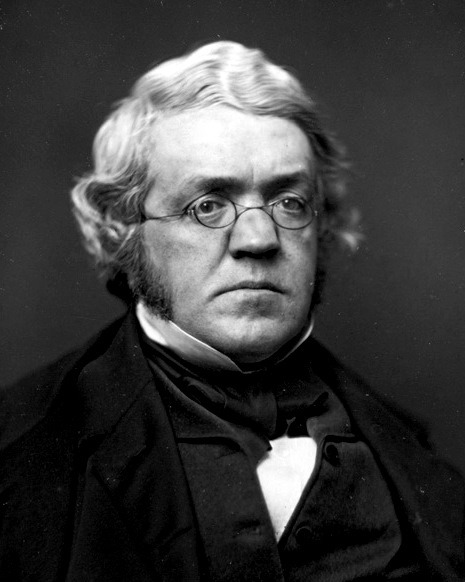
William Makepeace Thackeray, born on July 18, 1811, in Calcutta, India, was one of the most prominent English novelists of the 19th century. Best known for his satirical masterpiece Vanity Fair, Thackeray’s work offers a piercing critique of Victorian society, exposing its hypocrisies and moral shortcomings. His keen eye for human folly and his ability to blend wit with incisive social commentary made him a literary giant, rivaling contemporaries such as Charles Dickens. This article delves into Thackeray’s life, examining his rise to fame, significant works, and the enduring impact of his literary legacy.
Early Life and Education
William Makepeace Thackeray was born into a privileged Anglo-Indian family. His father, Richmond Thackeray, served as a secretary for the British East India Company, which afforded the family a comfortable lifestyle. However, Thackeray’s early years were marked by a significant upheaval. After his father’s death in 1815, young William was sent to England at the tender age of five to receive a proper British education.
Thackeray’s formative years were spent at prestigious institutions, first at a school in Southampton, and later at Charterhouse School in London. It was during his time at Charterhouse that Thackeray developed a deep-seated aversion to the rigid and often brutal educational system of the time. This experience would later inform much of his satirical writing, where he frequently critiqued the oppressive nature of British institutions.
In 1828, Thackeray began his studies at Trinity College, Cambridge. However, academia did not capture his interest for long. He left Cambridge in 1830 without a degree, opting instead to travel across Europe, where he briefly studied law. It was during this period that he encountered the literary titan Johann Wolfgang von Goethe, an experience that would leave a lasting impression on the young writer.
Financial Troubles and Early Career
Thackeray’s early adulthood was marred by financial instability, a situation exacerbated by his own mismanagement of money. At the age of 21, he inherited a substantial sum from his late father, but a series of ill-fated investments and ventures quickly depleted his inheritance. Among these ventures were two unsuccessful newspapers, The National Standard and The Constitutional, both of which failed to gain traction and were soon shuttered.
Faced with dwindling financial resources, Thackeray turned to writing and illustration to support himself. He moved to Paris to study art, producing caricatures and sketches that displayed his nascent satirical talent. Although his artistic career never took off, the experience honed his skills in observation and critique, which would later become hallmarks of his literary work.
Marriage and Personal Struggles
In 1836, Thackeray married Isabella Gethin Shaw, with whom he would have three daughters: Jane, Harriet, and Anne. Tragically, Jane died in infancy, a loss that profoundly affected Thackeray. His marriage to Isabella was marked by both joy and deep sorrow. In 1840, Isabella began to suffer from severe mental illness, a condition that would persist for the rest of her life. Thackeray remained devoted to her despite the strain on their relationship, and he shouldered the responsibility of caring for their children while managing his writing career.
This period of personal turmoil deeply influenced Thackeray’s writing, imbuing his work with a sense of melancholy and a keen awareness of human frailty. Despite the challenges in his personal life, Thackeray’s literary career began to gain momentum during the 1840s, as he found success with a series of serialized novels and satirical essays.
Rise to Fame: Vanity Fair and Literary Success
Thackeray’s breakthrough came in 1847 with the publication of Vanity Fair: A Novel Without a Hero. The novel, serialized in 19 monthly installments, quickly established Thackeray as a major literary figure. Vanity Fair is a biting satire of early 19th-century British society, focusing on the lives of two women, Becky Sharp and Amelia Sedley, as they navigate the complex social hierarchy of the time.
The novel’s title, taken from John Bunyan’s Pilgrim’s Progress, alludes to the superficiality and moral emptiness of the society it depicts. Thackeray’s portrayal of Becky Sharp, a resourceful and ambitious woman who uses her charm and cunning to rise through the social ranks, was particularly groundbreaking. Unlike the typical heroines of Victorian literature, Becky is unapologetically flawed, driven by a relentless desire for wealth and status. Through her, Thackeray challenges the reader to question the moral underpinnings of a society that rewards such behavior.
Vanity Fair was met with critical acclaim and commercial success, solidifying Thackeray’s reputation as one of the leading novelists of his time. The novel’s success also marked a turning point in Thackeray’s career, allowing him to devote himself fully to writing.
Satire and Social Commentary in Thackeray’s Work
Thackeray’s writing is distinguished by its sharp wit and penetrating social commentary. His works often explore themes of hypocrisy, greed, and the vanity of human desires. Through his novels, Thackeray sought to hold a mirror up to society, exposing its flaws and prompting readers to reflect on their own values and behaviors.
In The Luck of Barry Lyndon (1844), later republished as The Memoirs of Barry Lyndon, Thackeray presents a satirical portrait of an unscrupulous adventurer who rises through society by means of deceit and manipulation. The novel’s anti-hero, Barry Lyndon, embodies the Thackerayan distrust of romantic ideals and the glorification of military and aristocratic virtues. The novel’s tone is one of detached irony, with Thackeray using his narrator’s self-serving perspective to highlight the absurdity of societal conventions.
Thackeray’s The History of Pendennis (1848-1850) is another key work that delves into the life of Arthur Pendennis, a young man from the provinces who aspires to become a writer in London. The novel is semi-autobiographical, drawing on Thackeray’s own experiences and struggles as a young writer. Through Pendennis, Thackeray explores the pitfalls of ambition and the compromises one must make in the pursuit of success.
Rivalry with Charles Dickens
Despite his success, Thackeray’s literary career was often overshadowed by that of his contemporary, Charles Dickens. The two authors shared a mutual respect but also a competitive rivalry. Dickens, with his penchant for sentimentalism and melodrama, often struck a chord with the reading public, while Thackeray’s more cynical and ironic approach appealed to a different, perhaps more discerning audience.
Thackeray’s reluctance to pander to popular tastes and his commitment to realism often placed him at odds with the more crowd-pleasing tendencies of Dickens. Nevertheless, Thackeray’s work was admired for its intellectual rigor and its unflinching portrayal of human nature. While Dickens’ novels often featured clear moral resolutions, Thackeray’s works were more ambiguous, reflecting the complexities and contradictions of life.
Later Works and Legacy
In the 1850s, Thackeray continued to write prolifically, producing works such as The History of Henry Esmond (1852) and The Newcomes (1855). Henry Esmond is a historical novel set in the early 18th century, notable for its meticulous attention to historical detail and its exploration of the themes of honor and loyalty. The novel is often regarded as one of Thackeray’s finest achievements, showcasing his ability to weave historical narrative with personal drama.
Thackeray’s final major work, The Adventures of Philip (1861-1862), returned to themes of personal integrity and moral compromise. The novel, while less celebrated than his earlier works, still reflects Thackeray’s enduring preoccupation with the moral dilemmas faced by individuals in a rapidly changing society.
Beyond his novels, Thackeray was also a prolific essayist and critic. His lectures on the English humorists of the 18th century, delivered in 1851, were later published as The English Humourists of the Eighteenth Century. These lectures reveal Thackeray’s deep admiration for writers such as Jonathan Swift, Alexander Pope, and Samuel Johnson, whose satirical and moralistic works had a profound influence on his own writing.
In 1859, Thackeray was appointed editor of the newly established Cornhill Magazine, a position that allowed him to shape the literary tastes of the Victorian reading public. However, his tenure was short-lived, and he eventually resigned due to disagreements with the magazine’s publishers.
Death and Posthumous Recognition
William Makepeace Thackeray died of a heart attack on December 24, 1863, at the age of 52. He was buried in Kensal Green Cemetery in London. In recognition of his contributions to English literature, a memorial plaque was placed in Westminster Abbey, where he is honored alongside other great writers of the era.
Thackeray’s legacy as a writer is firmly established. His works continue to be studied and appreciated for their insightful critique of society and their rich characterizations. While his reputation during his lifetime was somewhat overshadowed by the popularity of Dickens, Thackeray’s influence on the development of the English novel is undeniable. His commitment to realism, his satirical prowess, and his exploration of the moral complexities of life have ensured his place in the pantheon of great English writers.
Conclusion
William Makepeace Thackeray remains one of the most important figures in 19th-century English literature. His works, particularly Vanity Fair, stand as enduring monuments to his genius. Thackeray’s ability to combine satire with deep psychological insight into his characters has left a lasting impact on the literary world. Through his novels, he offered a window into the social dynamics of Victorian England, challenging his readers to reflect on the nature of society, morality, and human ambition.
As we continue to engage with Thackeray’s work, his sharp observations and critique of human nature remain as relevant today as they were in the Victorian era. His legacy lives on, not just in the pages of his novels, but in the continuing discussions and analyses of his contributions to literature.


