
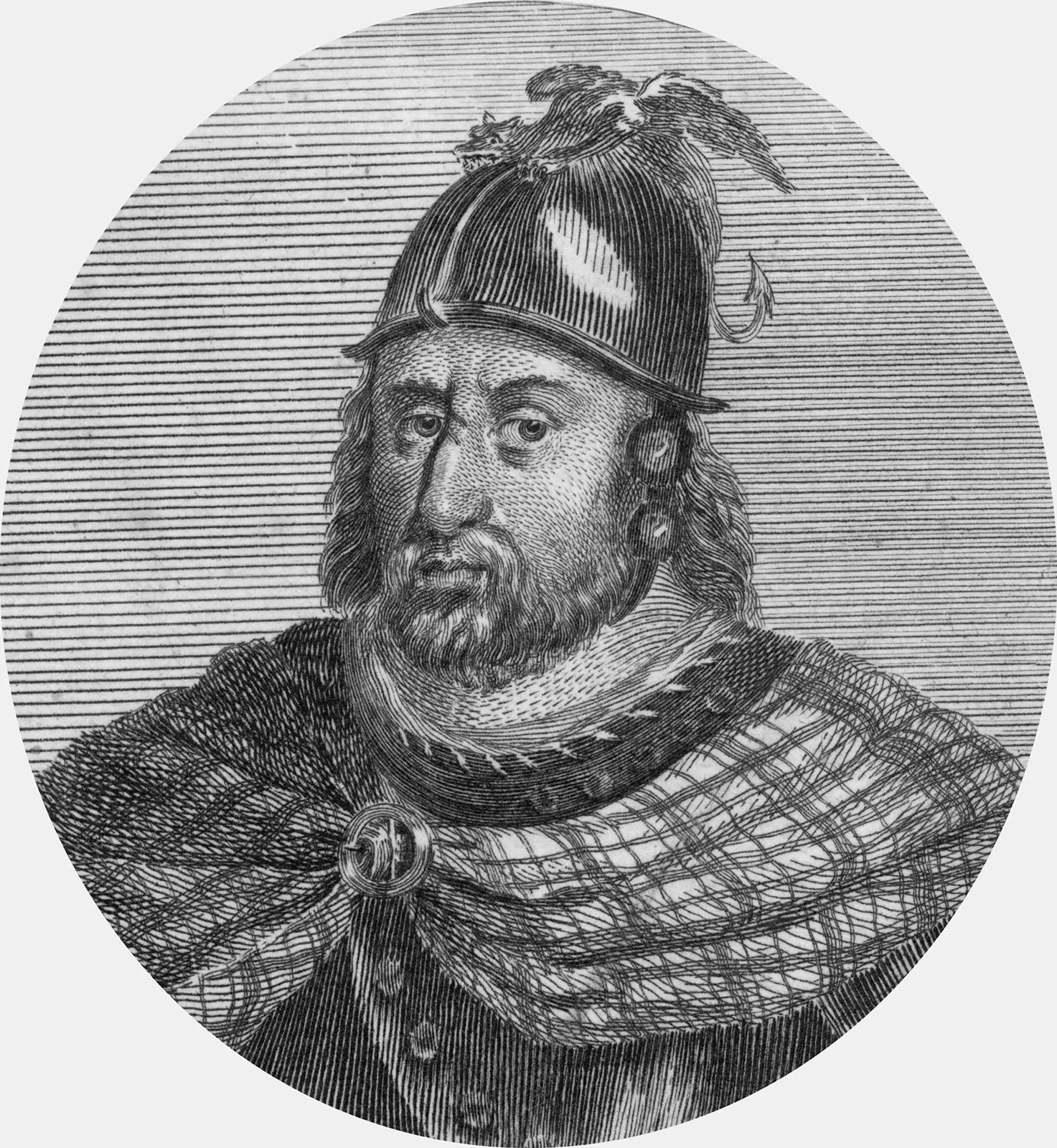
William Wallace, born around 1270 near Kilmarnock in Ayrshire, Scotland, is one of the most iconic figures in Scottish history. He is celebrated as a national hero for his role in leading the Scottish resistance against English occupation during the Wars of Scottish Independence. Wallace’s life and legacy have been immortalized in popular culture, most notably in the 1995 film “Braveheart,” directed by and starring Mel Gibson. While much of Wallace’s early life is shrouded in mystery, his later years are well-documented and serve as a testament to his unwavering commitment to Scotland’s freedom.
Early Life and Background
William Wallace was born into a relatively well-off family in the Scottish lowlands. His father, Sir Malcolm Wallace, was a minor nobleman, which afforded young William the opportunity to receive an education that was uncommon for many during that time. Wallace is believed to have been educated by his uncles, who were priests, allowing him to learn Latin and French, languages that were essential for anyone involved in the administration or governance of the time.
The political landscape of Scotland during Wallace’s youth was tumultuous. The country was embroiled in a struggle for independence from English rule, with various Scottish nobles vying for power. The death of Alexander III of Scotland in 1286 led to a succession crisis, ultimately resulting in Edward I of England asserting his claim over Scotland, declaring it a vassal state. This move by Edward I set the stage for the conflicts that would define Wallace’s life.
The Rise of a Rebel Leader
William Wallace’s rise to prominence began in 1297, in a Scotland that was suffering under the harsh rule of English occupiers. The exact circumstances that led Wallace to take up arms are unclear, but it is widely believed that personal grievances, possibly including the death of his father at the hands of the English, fueled his desire for revenge.
Wallace’s first recorded act of rebellion occurred in May 1297 when he killed the English sheriff of Lanark, William de Heselrig. This act of defiance sparked a series of uprisings across Scotland, and Wallace quickly became a central figure in the resistance movement. His actions attracted followers from various regions, and soon he was leading a growing army of Scots determined to drive the English out of their homeland.
Wallace’s success as a military leader was highlighted in the Battle of Stirling Bridge on September 11, 1297. Despite being outnumbered, Wallace and his co-commander Andrew de Moray devised a strategy that exploited the English army’s overconfidence. The narrowness of the Stirling Bridge played a crucial role in their victory; as English troops crossed the bridge, Wallace’s forces attacked, causing the bridge to collapse under the weight of the soldiers. The battle was a decisive victory for the Scots and marked a turning point in the struggle for Scottish independence.
Guardian of Scotland and the Struggle for Independence
Following the victory at Stirling Bridge, William Wallace was knighted and appointed “Guardian of Scotland,” a position that recognized his leadership and commitment to the Scottish cause. As Guardian, Wallace sought to organize the Scottish resistance and expel the English from Scottish territory.
However, Wallace’s triumph was short-lived. In 1298, Edward I of England, known as “Longshanks,” personally led a massive army into Scotland. The two forces met at the Battle of Falkirk on July 22, 1298. Despite Wallace’s strategic use of “schiltrons” (circular formations of spearmen) to defend against the English cavalry, the Scots were ultimately overwhelmed by the superior numbers and firepower of the English forces. The battle ended in a devastating defeat for Wallace and the Scottish army.
After Falkirk, Wallace resigned as Guardian of Scotland, passing the mantle to Robert the Bruce and John Comyn. Wallace continued to resist the English occupation, but his influence began to wane as internal divisions among the Scottish nobility hindered the effectiveness of the resistance.
Capture and Execution
In 1305, William Wallace was captured by the English near Glasgow, betrayed by Sir John de Menteith, a Scottish knight loyal to Edward I. Wallace was taken to London, where he was subjected to a show trial on charges of treason. Wallace famously defended himself by stating that he could not be a traitor, as he had never sworn allegiance to Edward I. Nevertheless, he was found guilty and sentenced to death.
Wallace’s execution on August 23, 1305, was particularly brutal. He was hanged, drawn, and quartered—a punishment reserved for those convicted of high treason. His body was dismembered, with his head displayed on London Bridge and his limbs sent to various locations across Scotland as a warning to others who might defy English rule.
Despite his horrific death, Wallace’s legacy lived on. His martyrdom only strengthened the resolve of the Scottish people to fight for their independence, a cause that would ultimately succeed under the leadership of Robert the Bruce at the Battle of Bannockburn in 1314.
Legacy and Cultural Impact
William Wallace is remembered as a symbol of Scottish nationalism and resistance. His life and actions have inspired countless works of literature, music, and film, most notably the epic film “Braveheart,” which won five Academy Awards, including Best Picture. Although the film takes significant liberties with historical accuracy, it has played a significant role in cementing Wallace’s status as a cultural icon.
In Scotland, Wallace is celebrated as a national hero. Monuments and memorials dedicated to his memory can be found throughout the country, including the towering National Wallace Monument near Stirling, which was erected in the 19th century to honor his contributions to Scotland’s struggle for independence.
Wallace’s life has also been commemorated in music, with songs like “The Clansman” by Iron Maiden and “The Brave” by Runrig paying tribute to his legacy. His story continues to resonate with those who value freedom and resistance against oppression, making him a lasting symbol of the fight for justice and national self-determination.
Conclusion
William Wallace’s life is a testament to the power of resilience and the enduring human spirit. Though his time as a leader of the Scottish resistance was brief, his impact was profound, inspiring generations of Scots to continue the fight for their nation’s independence. His legacy as a fearless warrior and champion of freedom has made him one of the most revered figures in Scottish history.
Today, Wallace’s name is synonymous with the struggle for freedom, not just in Scotland but around the world. His story serves as a powerful reminder of the sacrifices made by those who fight for their beliefs and the enduring power of a single individual’s influence on the course of history.


