
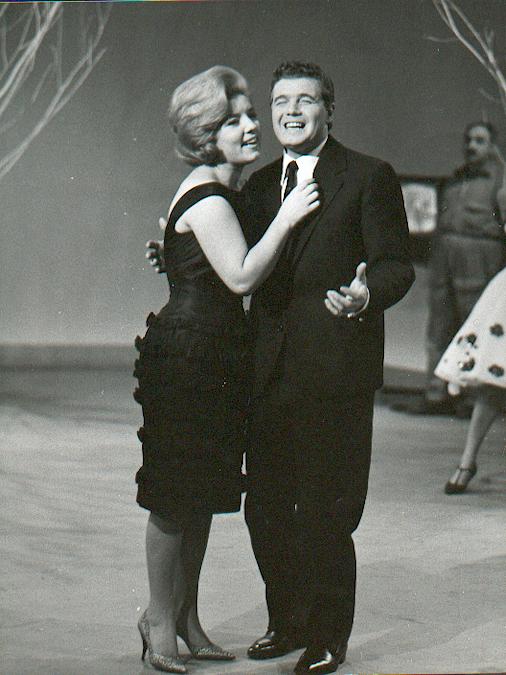
Wilma De Angelis, born on April 8, 1930, in Milan, Italy, is a celebrated Italian singer and television personality whose career spans several decades. Known for her contributions to Italian pop music in the 1950s and 1960s, De Angelis later became a beloved figure on Italian television, particularly for her long-running cooking shows. Her journey from a jazz singer to a television icon is a testament to her versatility and enduring appeal in the Italian entertainment industry. This article delves into the life of Wilma De Angelis, exploring her rise to fame, her contributions to music and television, and her lasting impact on Italian culture.
Early Life and Beginnings in Music
Wilma De Angelis was born in Milan during a time of significant cultural and political upheaval in Italy. Despite the challenges of growing up during World War II, De Angelis found solace and inspiration in music. From a young age, she was drawn to the sounds of jazz, a genre that was gaining popularity in Italy during the post-war period. Her early musical influences included iconic jazz standards like “Summertime” and “My Funny Valentine,” which she would later perform in local venues.
By the mid-1950s, De Angelis was performing in dance halls and clubs throughout Lombardy, honing her craft as a live performer. In 1956, she gained national recognition by winning the title of “Reginetta del Jazz Italiano” (Queen of Italian Jazz) at a competition in Boario Terme, where she captivated audiences with her renditions of jazz classics. This victory marked the beginning of her professional career and set the stage for her subsequent success in the Italian music scene.
Breakthrough and Early Success
Wilma De Angelis’s big break came in 1957 when she participated in the Festival Jazz di Sanremo, an event held a week before the renowned Sanremo Music Festival. It was here that she caught the attention of William Galassini, a prominent figure in the Italian music industry. Galassini recognized her talent and offered her a series of radio performances, which helped introduce her to a broader audience.
Following this exposure, De Angelis signed a recording contract with Philips, a major record label. She began recording singles for the international market, particularly in the Netherlands, where she found considerable success. Among her early hits were “A Firenze in carrozzella” and “Casetta in Canadà,” songs that resonated with audiences and established her as a rising star in Europe. Her popularity in the Netherlands was a precursor to the broader recognition she would soon achieve in Italy.
Sanremo Music Festival and National Fame
In 1959, Wilma De Angelis made her debut at the Sanremo Music Festival, one of the most prestigious music competitions in Italy. She performed the song “Nessuno,” which became a hit and significantly raised her profile in the Italian music industry. Her performance at Sanremo was well-received, and she quickly became a household name. That same year, she participated in the Festival di Napoli, where she performed the song “Cerasella” alongside Gloria Christian. The success of these performances cemented her status as one of Italy’s leading female vocalists of the time.
Following her success at Sanremo, De Angelis continued to build her career with appearances on popular television shows such as “Il traguardo degli assi,” hosted by Corrado Mantoni, and “Buone vacanze,” directed by Antonello Falqui. She also performed on “Canzonissima,” a popular music show, where she had the opportunity to duet with Mina, another iconic Italian singer, on the song “Nessuno.” These television appearances helped solidify her status as a star in the Italian entertainment industry.
In 1960, De Angelis returned to the Sanremo Music Festival with the songs “Splende l’arcobaleno” and “Quando vien la sera,” further showcasing her vocal talent. She also participated in the Festival di Napoli with songs such as “‘O professore e Carulina” and “S’è avutato ‘o viento,” demonstrating her versatility in performing a wide range of musical styles.
The 1960s: Continued Success and Challenges
The early 1960s were a period of continued success for Wilma De Angelis. She performed at the “Festival del Musichiere” with the song “Corriamoci incontro,” written by Domenico Modugno, one of Italy’s most famous singer-songwriters. In 1961, she returned to Sanremo with the song “Patatina,” written by Gianni Meccia. Although the song did not make it to the finals, it became a popular hit, earning De Angelis the nickname “Patatina della canzone italiana” (Patatina of Italian Song) and “Miss Patatina.”
De Angelis continued to be a prominent figure in the Italian music scene throughout the 1960s. She participated in various music festivals, including the Festival di Napoli and the Festival di Zurigo. Her final appearance at the Sanremo Music Festival came in 1963, where she performed the songs “Se passerai di qui” and “Non costa niente.” Although she did not win, her performances were well-received, and she continued to enjoy success with songs like “Gambadilegno senza ritegno,” “Mi piace la musica,” “Timido,” and “Saprò sorridere.”
However, the mid-1960s also marked a period of transition for De Angelis. The music industry was changing rapidly, with new artists emerging and new musical styles gaining popularity. During this time, De Angelis signed a new contract with Philips, but the label focused on promoting younger talent, leading to a decline in her recording output. Despite this, she continued to perform internationally, particularly in Northern Europe, where she maintained a loyal fan base.
Reinvention and Television Success
In the late 1970s, Wilma De Angelis reinvented herself as a television personality. She appeared on the show “Lasciami cantare una canzone,” created by Paolo Limiti and hosted by Nunzio Filogamo. This transition to television marked the beginning of a new phase in her career. In 1979, De Angelis began hosting “Telemenù,” a daily cooking show on Telemontecarlo, where Paolo Limiti served as the artistic director.
“Telemenù” was a groundbreaking program that combined cooking with entertainment, and it became a massive hit. The show ran for 18 years, undergoing several name changes, including “Sale, pepe e fantasia,” “La spesa di Wilma,” “Complimenti allo chef,” and “A pranzo con Wilma.” De Angelis’s warm personality and natural charm made her a beloved figure on Italian television, and she became known as much for her culinary skills as for her singing.
During the 1980s, De Angelis also remained active in music. She joined the cast of “Avanti c’è musica,” a theatrical recital featuring other Italian music legends like Narciso Parigi and Nilla Pizzi. She also returned to the recording studio to produce the album “Questi pazzi pazzi Oldies,” which featured swing versions of famous Italian songs. The project was a collaboration with a group of fellow artists known as the Oldies, including Claudio Celli, Ernesto Bonino, Cocky Mazzetti, and Nicola Arigliano.
In addition to her music and television work, De Angelis explored new creative avenues. In 1988, she published a cookbook titled “Le mille meglio,” which showcased her passion for cooking. The following year, she appeared in the television adaptation of “I promessi sposi,” demonstrating her versatility as an entertainer.
Legacy and Impact on Italian Culture
Wilma De Angelis’s career is a remarkable example of adaptability and resilience in the entertainment industry. Over the decades, she successfully navigated the changing landscape of Italian music and television, continually reinventing herself and finding new ways to connect with audiences. Her contributions to Italian pop music in the 1950s and 1960s helped shape the sound of an era, and her work in television brought her into the homes of millions of Italians, making her a beloved household name.
In the 1990s and 2000s, De Angelis continued to be a presence on Italian television. She made guest appearances on shows such as “Il caso Sanremo,” hosted by Renzo Arbore, and “C’era una volta il Festival,” hosted by Mike Bongiorno. She also published more cookbooks, including “Quando cucina Wilma” in 1992 and the “In cucina con fantasia” series in 1994, further cementing her status as a culinary expert.
Even in her later years, De Angelis remained active and engaged with her fans. In 2011, she appeared in the film “Femmine contro maschi,” directed by Fausto Brizzi, showing that her talent and appeal transcended generations. In 2020, she was invited to participate in a special gala celebrating the 70th anniversary of the Sanremo Music Festival. Although her invitation was later withdrawn by RAI, the incident sparked a public outcry, leading to her being celebrated on “Domenica In,” hosted by Mara Venier, the day after the festival’s finale.
Conclusion
Wilma De Angelis’s life and career are a testament to her enduring talent, versatility, and ability to connect with audiences across different mediums. From her early days as a jazz singer in Milan to her rise as a pop music icon and later as a beloved television personality, De Angelis has left an indelible mark on Italian culture. Her contributions to music, television, and culinary arts continue to be celebrated, and her legacy as one of Italy’s most beloved entertainers remains strong. As she continues to inspire new generations, Wilma De Angelis’s story is a reminder of the power of reinvention and the lasting impact of a life dedicated to the arts.


