
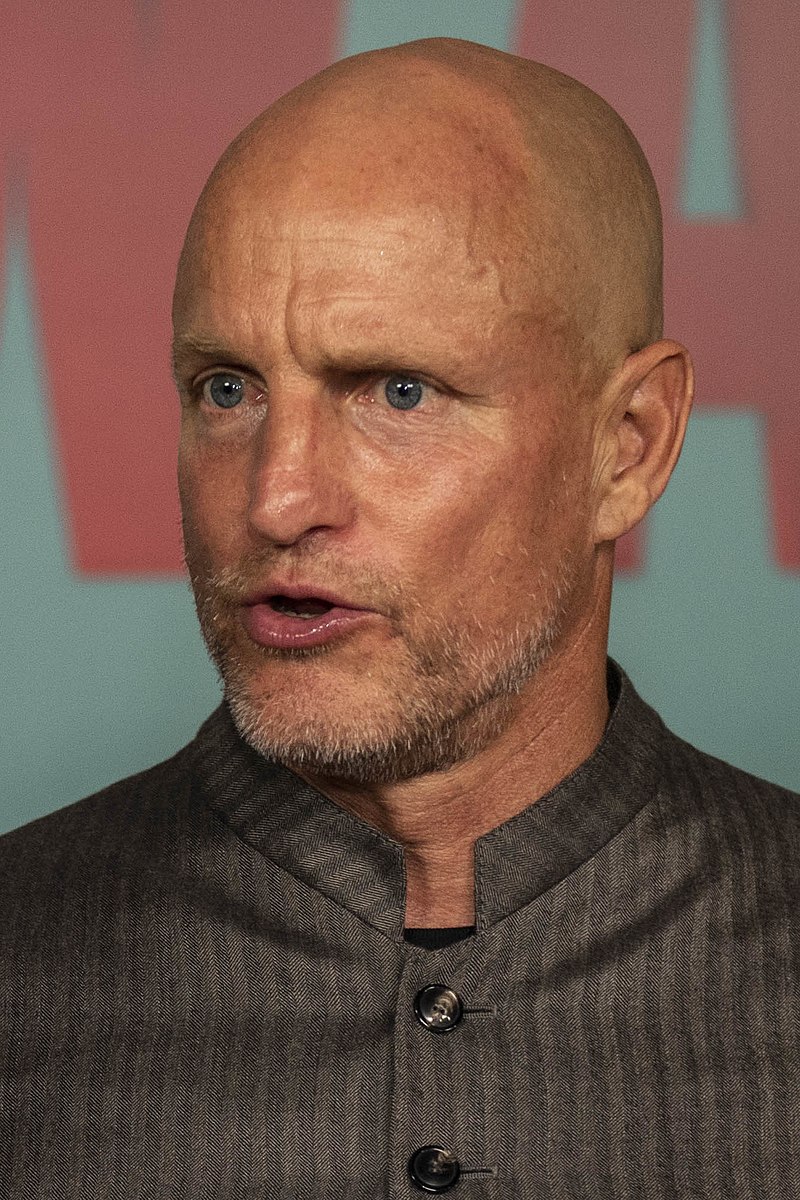
Woody Harrelson, born Woodrow Tracy Harrelson on July 23, 1961, in Midland, Texas, is a prominent American actor known for his versatility and unique talent in both comedic and dramatic roles. With a career spanning over four decades, Harrelson has become a household name in Hollywood, recognized for his performances in iconic films and television series. This article delves into the life, fame, and career highlights of Woody Harrelson, exploring the nuances of his journey to stardom and the historical context that shaped his life.
Early Life and Background
Woody Harrelson’s upbringing was marked by significant challenges and complexities that played a crucial role in shaping his character and outlook on life. He was born to Diane and Charles Voyde Harrelson, the latter of whom had a notorious reputation as a convicted hitman. Harrelson’s parents divorced when he was just three years old, leading him to be primarily raised by his mother. His father, Charles, was convicted for the assassination of federal judge John H. Wood Jr. in 1979 and was also believed to have been involved in the assassination of President John F. Kennedy, although these claims are surrounded by controversy and speculation. Charles Harrelson spent the rest of his life in prison, which undoubtedly had a profound impact on Woody and his two brothers, Jordan and Brett.
In 1973, Woody Harrelson moved to Lebanon, Ohio, his mother’s hometown, where he attended Lebanon High School. Despite the turbulent family background, Harrelson found solace in education and extracurricular activities. He worked as a woodcarver at a local amusement park while pursuing his studies, a humble beginning that would contrast sharply with his future fame.
Harrelson later attended Hanover College in Indiana, where he earned a degree in theater arts in 1983. His time at Hanover College was pivotal, not only academically but also personally. He joined the Sigma Chi fraternity, where he formed lasting friendships and connections that would support him in his future career.
Breaking into Hollywood: Early Career and “Cheers”
After graduating, Woody Harrelson moved to New York City with dreams of pursuing a career in acting. He started his career in theater, performing in various productions, including Neil Simon’s “Biloxi Blues.” However, it was his role as Woody Boyd in the popular NBC sitcom “Cheers” that catapulted him to fame. Harrelson joined the cast in 1985, during the show’s fourth season, and quickly became a fan favorite. His portrayal of the naive yet lovable bartender earned him five Emmy nominations and one win for Outstanding Supporting Actor in a Comedy Series in 1989.
“Cheers” was more than just a television show; it was a cultural phenomenon that defined a generation. Harrelson’s character, Woody Boyd, became synonymous with the show’s success, and his performance resonated with audiences across the United States. The role established Harrelson as a talented comedic actor, opening doors for future opportunities in film and television.
Transition to Film: Early Roles and Breakthroughs
While still working on “Cheers,” Woody Harrelson began to make a name for himself in the film industry. His first notable role came in the 1986 comedy “Wildcats,” where he starred alongside Goldie Hawn. However, it wasn’t until the early 1990s that Harrelson started to gain significant recognition for his work in films. In 1991, he appeared in “Doc Hollywood” and “Ted and Venus,” but it was his role in the 1992 film “White Men Can’t Jump” that marked his breakthrough in Hollywood.
“White Men Can’t Jump,” directed by Ron Shelton, was a commercial success and showcased Harrelson’s ability to handle both comedic and dramatic elements in a single performance. The film, which also starred Wesley Snipes, centered around two street basketball hustlers who team up to con unsuspecting players. Harrelson’s portrayal of Billy Hoyle, a hustler with a troubled past, resonated with audiences and critics alike, further solidifying his status as a rising star in Hollywood.
A Controversial Star: “Natural Born Killers” and Critical Acclaim
The mid-1990s saw Woody Harrelson taking on more challenging and controversial roles, reflecting his desire to push the boundaries of his craft. In 1994, he starred in Oliver Stone’s “Natural Born Killers,” a film that sparked widespread debate for its portrayal of violence and its critique of the media. Harrelson’s portrayal of Mickey Knox, a psychopathic killer, was both chilling and mesmerizing, earning him praise for his ability to bring complexity to a deeply disturbing character.
“Natural Born Killers” was not just a film; it was a commentary on the sensationalism of violence in the media and its impact on society. Harrelson’s performance was a key element in conveying this message, and the film remains a significant part of his legacy. It also marked a turning point in his career, as he transitioned from a comedic actor to a serious performer capable of tackling complex and controversial roles.
In 1996, Harrelson delivered another standout performance in “The People vs. Larry Flynt,” where he portrayed the controversial publisher Larry Flynt. Directed by Milos Forman, the film chronicled Flynt’s battles for free speech and his legal confrontations with the U.S. government. Harrelson’s portrayal earned him an Academy Award nomination for Best Actor, further cementing his status as a leading man in Hollywood. The film was both critically acclaimed and commercially successful, with Harrelson’s performance being a central factor in its success.
Continued Success: The 2000s and Beyond
As the new millennium began, Woody Harrelson continued to build on his success with a series of diverse and memorable roles. In 2007, he appeared in the Coen Brothers’ critically acclaimed film “No Country for Old Men,” where he played the role of Carson Wells, a bounty hunter. The film went on to win four Academy Awards, including Best Picture, and Harrelson’s performance, though brief, was widely praised.
Harrelson’s versatility as an actor was further demonstrated in 2009 when he starred in “Zombieland,” a horror-comedy that became a cult classic. His role as Tallahassee, a tough and eccentric zombie killer, showcased his ability to blend humor with action, making him a favorite among fans of the genre. The film’s success led to a sequel, “Zombieland: Double Tap,” released in 2019, where Harrelson reprised his role to much fanfare.
In 2011, Harrelson starred in the critically acclaimed drama “Rampart,” directed by Oren Moverman. His portrayal of a corrupt LAPD officer earned him another wave of critical acclaim, with many considering it one of his best performances. Harrelson’s ability to portray flawed, complex characters with nuance and depth has been a hallmark of his career, and “Rampart” was no exception.
Recent Projects and Legacy
Woody Harrelson has shown no signs of slowing down in recent years. In 2017, he took on the role of Colonel in “War for the Planet of the Apes,” a performance that was both intense and emotionally charged. The same year, he starred in “Three Billboards Outside Ebbing, Missouri,” a film that received widespread acclaim and numerous awards. Harrelson’s role as Sheriff Bill Willoughby earned him another Academy Award nomination for Best Supporting Actor, further solidifying his reputation as one of the finest actors of his generation.
In addition to his film work, Harrelson has also made significant contributions to television. His role as Detective Marty Hart in the first season of HBO’s “True Detective” (2014) was widely praised and earned him a Primetime Emmy Award nomination. The show was a critical and commercial success, with Harrelson’s performance being a key factor in its popularity.
Harrelson’s most recent projects include his portrayal of Cletus Kasady, also known as Carnage, in the 2021 film “Venom: Let There Be Carnage.” The role allowed Harrelson to once again explore the darker side of human nature, a theme that has been prevalent throughout his career.
Conclusion: A Legacy of Versatility and Depth
Woody Harrelson’s career is a testament to his versatility, talent, and commitment to his craft. From his early days as a beloved sitcom character to his later roles in critically acclaimed films, Harrelson has consistently demonstrated his ability to captivate audiences with his performances. His journey has been marked by both triumphs and challenges, but through it all, he has remained a resilient and dedicated artist.
Harrelson’s legacy in Hollywood is one of depth and range, with a body of work that spans comedy, drama, action, and everything in between. He has taken on roles that challenge societal norms, explore the human condition, and push the boundaries of what is possible in film and television. As he continues to work on new projects, there is no doubt that Woody Harrelson will remain a significant and influential figure in the entertainment industry for years to come.


