
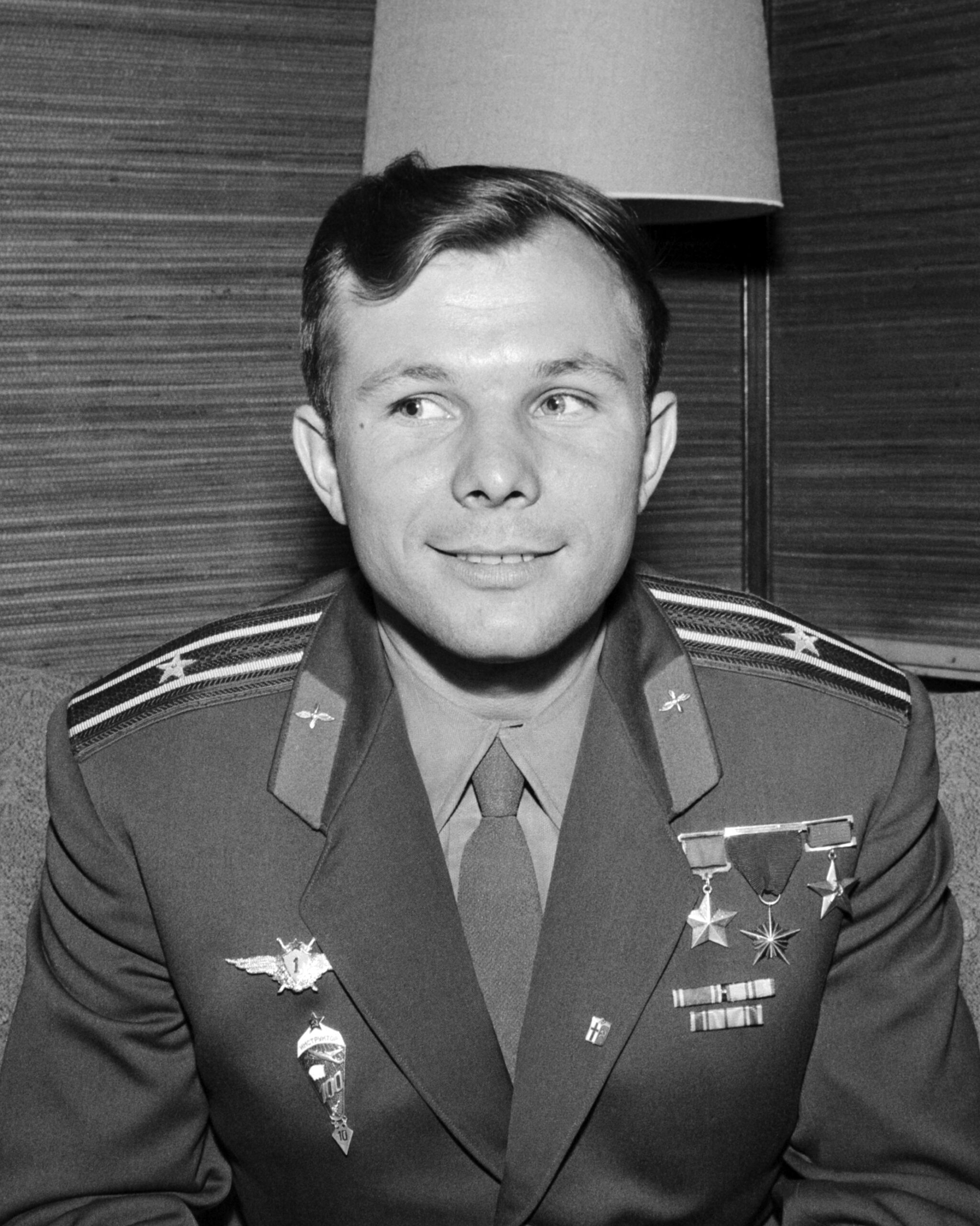
Yuri Gagarin is a name that resonates with the pioneering spirit of humanity’s quest to explore the unknown. As the first human to journey into space, Gagarin became a global icon, symbolizing the potential of space exploration and the Cold War competition between superpowers. His life story is one of determination, skill, and a bit of mystery, making him an enduring figure in history. This article delves into the age, fame, and life highlights of Yuri Gagarin, providing insights into the man behind the legend.
Early Life and Background
Yuri Alekseyevich Gagarin was born on March 9, 1934, in the village of Klushino, Russia, during a tumultuous period marked by the aftermath of the Russian Revolution and the rise of the Soviet Union. Gagarin’s upbringing was humble; his father worked as a carpenter on a collective farm, and his family experienced the hardships of World War II firsthand. The German invasion of the Soviet Union had a profound impact on young Yuri, as his father joined the military to defend the country, while his mother took him and his elder brother away from the frontlines to keep them safe.
Despite the adversities, Gagarin showed an early interest in science and technology. He attended a technical school in Moscow, where he focused on technical subjects despite the economic challenges that forced him to work odd jobs to support his education. It was during this time that Gagarin’s fascination with aviation began to take shape.
The Path to Space
Gagarin’s passion for flight led him to enroll in a local flying club, where his talent for piloting aircraft quickly became apparent. His instructors recognized his natural ability, and after completing his studies, he joined the Soviet Air Force in 1955. Gagarin’s exceptional skills as a pilot soon caught the attention of his superiors, and he was selected for specialized training and testing of new aircraft systems.
As the space race between the United States and the Soviet Union intensified, Gagarin volunteered for the Soviet space program, eager to “fly higher” than ever before. His determination and skill earned him a place among the first group of cosmonauts selected for the program. After rigorous training and psychological testing, Gagarin was chosen to pilot the Vostok 1 mission, which would make history.
The Historic Flight
On April 12, 1961, Yuri Gagarin became the first human to travel into space. Launched from the Baikonur Cosmodrome aboard the Vostok 1 spacecraft, Gagarin orbited the Earth for 108 minutes, reaching a maximum altitude of 344 kilometers. The mission was a triumph for the Soviet Union, demonstrating that humans could survive the extreme conditions of space travel, including the launch and re-entry phases.
Gagarin’s flight was kept secret until after its successful completion, reflecting the intense competition of the Cold War era. The Vostok 1 mission was meticulously planned, and Gagarin’s calm demeanor during the flight was a testament to his training and confidence. He became the first human to experience weightlessness and to observe the Earth from space, famously exclaiming, “I see Earth! It is so beautiful.”
The return to Earth was not without its challenges. There are conflicting reports about how Gagarin landed, with Soviet sources claiming that he remained inside the capsule during descent, while some Western sources suggest that he ejected at an altitude of 7,000 meters and parachuted to safety. Regardless of the exact details, Gagarin’s safe return marked the successful completion of a groundbreaking mission.
The Aftermath and Legacy
Gagarin’s achievement made him an instant global celebrity. He was celebrated as a hero in the Soviet Union and around the world, receiving numerous accolades and honors. Gagarin embarked on a global tour, visiting countries across Europe, Africa, and Asia, where he was met with adoration and admiration. His humble background and charismatic personality endeared him to millions, and he became a symbol of Soviet success during the Cold War.
However, Gagarin’s fame also came with significant responsibilities. The Soviet government sought to protect their national hero, restricting his further involvement in space missions. Gagarin was appointed as the Deputy Training Director of the cosmonaut training center, where he played a crucial role in preparing the next generation of Soviet astronauts.
Despite these new duties, Gagarin remained passionate about flying. Tragically, his life was cut short on March 27, 1968, when he died in a training flight accident aboard a MiG-15 jet. The circumstances surrounding his death remain shrouded in mystery, with various theories ranging from a mid-air collision with another aircraft to mechanical failure due to weather conditions. Some conspiracy theories even suggest foul play, but the exact cause of the crash has never been definitively determined.
The Enduring Mystery of Gagarin’s Death
Gagarin’s untimely death at the age of 34 shocked the world and led to numerous investigations and speculations. The official Soviet report concluded that his MiG-15 jet likely entered the wake turbulence of a larger aircraft, causing it to lose control and crash. However, other theories have emerged over the years, including the possibility of a malfunctioning altimeter or poor weather conditions that led to the crash.
One of the more controversial theories suggests that Gagarin was deliberately killed by the Soviet government, which feared that he had become too influential and difficult to manage. This theory remains speculative, but it highlights the intense scrutiny and secrecy that surrounded Gagarin’s life and death during the Cold War.
Legacy and Commemoration
Despite the tragic end to his life, Yuri Gagarin’s legacy as a space pioneer remains undiminished. In Russia, he is revered as a national hero, and his name is synonymous with the country’s achievements in space exploration. The Yuri Gagarin Cosmonaut Training Center, located near Moscow, continues to train astronauts for space missions, ensuring that his legacy lives on.
In 1980, a towering 40-meter monument to Gagarin was erected in Moscow, crafted from titanium to symbolize his journey beyond the Earth. His likeness has been immortalized in countless statues, films, books, and even a lunar crater named in his honor. Gagarin’s image and name are also used to inspire new generations of space explorers, reminding them of the courage and determination required to push the boundaries of human knowledge.
Gagarin’s Impact on the Space Race
Yuri Gagarin’s historic flight had profound implications for the space race and the broader geopolitical landscape of the time. His success provided a significant boost to Soviet prestige, intensifying the competition between the USSR and the United States. The American response came in the form of President John F. Kennedy’s commitment to landing a man on the Moon, a goal that was ultimately achieved in 1969 with the Apollo 11 mission.
Gagarin’s flight also underscored the potential for peaceful cooperation in space exploration. Despite the Cold War rivalry, his mission paved the way for future collaborations between the Soviet Union (and later Russia) and the United States, culminating in joint projects such as the International Space Station.
Conclusion
Yuri Gagarin’s journey from a small village in Russia to becoming the first human in space is a testament to the power of determination, skill, and the human spirit’s desire to explore the unknown. His life, though tragically short, left an indelible mark on history and continues to inspire generations of scientists, engineers, and space enthusiasts.
As we look back on Gagarin’s achievements, we are reminded of the courage it took to venture into the great unknown and the sacrifices made by those who dared to dream of the stars. Yuri Gagarin will forever be remembered as the man who took humanity’s first steps into the cosmos, opening a new chapter in our understanding of the universe.


