
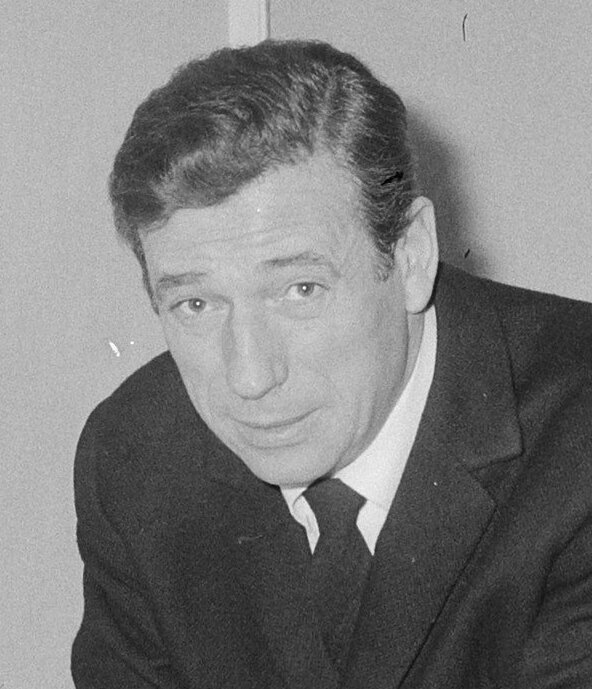
Yves Montand, born Ivo Livi on October 13, 1921, in Monsummano Alto, Italy, is an iconic figure in the world of cinema and music. His life is a remarkable journey that spans from the quiet hills of Tuscany to the vibrant stages of Paris, where he became one of France’s most beloved entertainers. This article delves into the life of Yves Montand, exploring his age, career highlights, and the historical context that shaped his rise to fame.
Early Life and Emigration to France
Yves Montand’s early life was deeply influenced by the political turmoil of the early 20th century. Born in Italy, Montand’s family was forced to flee the country in 1924 due to the rise of fascism under Benito Mussolini. The Livi family sought refuge in France, settling in the bustling port city of Marseille. This emigration would prove to be a pivotal moment in Montand’s life, as it set the stage for his eventual rise to stardom in the French entertainment industry.
Growing up in Marseille, Montand was exposed to a rich cultural milieu that would greatly influence his artistic development. The city’s diverse population and vibrant arts scene provided the young Montand with ample opportunities to explore his talents. Initially, he worked in various jobs, including as a dockworker and a hairdresser, but his passion for performing was undeniable.
The Beginnings of a Legendary Career
Montand’s foray into the entertainment world began in the late 1930s when he started performing in local cabarets. His natural charm and distinctive voice quickly garnered attention, and by the early 1940s, he was making a name for himself in the Parisian music scene. It was during this time that he adopted the stage name “Yves Montand,” a more French-sounding name that would resonate with his growing fan base.
A significant turning point in Montand’s career came in 1944 when he met the legendary singer Edith Piaf. Piaf recognized Montand’s potential and took him under her wing, helping to refine his performance style and introducing him to a broader audience. Their professional and personal relationship, although brief, was instrumental in Montand’s rise to fame. With Piaf’s guidance, Montand began to perform in some of Paris’s most prestigious venues, and his career took off.
Breakthrough with “Les Feuilles Mortes”
One of the most defining moments in Yves Montand’s career was his performance of the song “Les Feuilles Mortes” (Autumn Leaves). Composed by Joseph Kosma with lyrics by the poet Jacques Prévert, the song became an international sensation, largely due to Montand’s emotive rendition. “Les Feuilles Mortes” is a melancholic reflection on lost love and the passage of time, themes that resonated deeply with audiences worldwide. Montand’s version of the song helped establish him as a major star, not only in France but also internationally.
The success of “Les Feuilles Mortes” marked the beginning of Montand’s illustrious career as a chansonnier, a singer of French popular music. His ability to convey deep emotion through his voice made him one of the most beloved performers of his time. Montand’s repertoire expanded to include other classic French songs, and he became a fixture in the French music scene throughout the 1940s and 1950s.
Transition to Film and Acting Career
While Yves Montand was already a celebrated singer, his career took another significant turn when he transitioned into acting. His first film role came in 1946 with “Mentre Parigi dorme” (While Paris Sleeps), directed by Marcel Carné. Montand’s natural charisma and on-screen presence quickly made him a sought-after actor in French cinema. He seamlessly moved between comedy and drama, showcasing his versatility as an actor.
Montand’s acting career reached new heights in the 1950s and 1960s, as he starred in a series of critically acclaimed films. His collaborations with directors like Costa-Gavras and Jean-Pierre Melville resulted in some of the most iconic films of the era. Notably, Montand starred in Costa-Gavras’s political thrillers “Z” (1969) and “L’Aveu” (The Confession, 1970), where he portrayed characters caught in the moral and political turmoil of the time. These roles solidified Montand’s reputation as an actor capable of delivering powerful performances that resonated with contemporary audiences.
A Partnership with Simone Signoret
Yves Montand’s personal life was as eventful as his professional career. In 1951, he married the French actress Simone Signoret, and the couple became one of the most celebrated pairs in French cinema. Their marriage was not just a personal union but also a professional partnership that saw them collaborate on several films. Signoret and Montand starred together in movies like “Les Sorcières de Salem” (The Crucible, 1957) and “La Guerre est finie” (The War is Over, 1966).
Their relationship was often in the public eye, especially when Montand’s affair with Marilyn Monroe became widely known. Montand and Monroe starred together in the 1960 film “Let’s Make Love,” and their on-set romance made headlines around the world. Despite the affair, Montand and Signoret’s marriage endured, and they remained together until Signoret’s death in 1985.
Yves Montand and Political Cinema
Montand’s career was not only marked by his artistic achievements but also by his involvement in political cinema. His work with Costa-Gavras, in particular, highlighted his commitment to films with strong political messages. “Z,” a film about political assassination and corruption, was a landmark in political cinema and won numerous awards, including the Academy Award for Best Foreign Language Film. Montand’s performance in the film was widely praised, and it remains one of his most memorable roles.
In “L’Aveu,” Montand played a high-ranking Czechoslovakian official who is subjected to brutal interrogations during a Stalinist purge. The film’s intense portrayal of political repression resonated with audiences, and Montand’s performance was lauded for its emotional depth and authenticity. These films reflected Montand’s own leftist political views, and he became known as an actor who was not afraid to tackle challenging and controversial subjects.
Later Years and Legacy
As Yves Montand entered the later stages of his career, he continued to take on roles that challenged him as an actor. In the 1980s, he worked with director Claude Sautet on a series of films that explored themes of aging and existential reflection. Montand’s portrayals of men grappling with the complexities of life and love in films like “Garçon!” (1983) and “Jean de Florette” (1986) showcased his maturity as an actor and his ability to convey a wide range of emotions.
Montand’s final film role came in 1989 with the movie “IP5: L’île aux pachydermes” (1992), where he played an aging man who embarks on a journey of self-discovery. The film was a fitting end to Montand’s career, as it reflected many of the themes that had defined his work over the decades—identity, memory, and the passage of time.
Yves Montand passed away on November 9, 1991, at the age of 70. His death marked the end of an era in French cinema, but his legacy lives on through his extensive body of work. Montand’s contributions to music and film have left an indelible mark on French culture, and he remains a beloved figure to this day.
The Cultural and Historical Impact of Yves Montand
Yves Montand’s life and career cannot be fully appreciated without considering the broader cultural and historical context in which he lived. Montand’s rise to fame occurred during a period of significant social and political change in France. The aftermath of World War II, the rise of existentialism, and the cultural revolutions of the 1960s all influenced Montand’s work and the roles he chose to portray.
As an Italian immigrant who became a symbol of French culture, Montand’s story also reflects the broader experiences of immigrants in France during the 20th century. His success as a performer and actor demonstrated the possibilities of cultural integration and the richness that diverse backgrounds bring to the arts. Montand’s ability to connect with audiences through his music and films made him a beloved figure not only in France but also around the world.
Yves Montand’s Influence on Future Generations
Yves Montand’s influence extends beyond his own generation of performers. His ability to blend music and acting, his commitment to politically engaged cinema, and his charismatic presence have inspired countless artists in the decades since his passing. Montand’s approach to his craft—marked by a dedication to authenticity and emotional truth—continues to resonate with actors and musicians today.
Moreover, Montand’s legacy as a performer who was deeply connected to the political and social issues of his time serves as a reminder of the power of the arts to effect change. His work in films like “Z” and “L’Aveu” remains relevant as new generations of filmmakers and audiences grapple with the complexities of political and social justice.
Conclusion: Yves Montand – A Legend of French Cinema and Music
Yves Montand’s life is a testament to the power of talent, resilience, and the ability to adapt to changing circumstances. From his humble beginnings in Italy to his rise as one of France’s most cherished entertainers, Montand’s journey is one of passion, perseverance, and artistic brilliance. His contributions to cinema and music have left a lasting legacy that continues to inspire and captivate audiences around the world.
As we reflect on Yves Montand’s life and career, it is clear that he was more than just a performer—he was a symbol of the cultural and artistic vitality of his time. Montand’s work transcends the boundaries of nationality, language, and genre, making him a true icon of 20th-century entertainment. His influence will undoubtedly continue to be felt for generations to come.


