
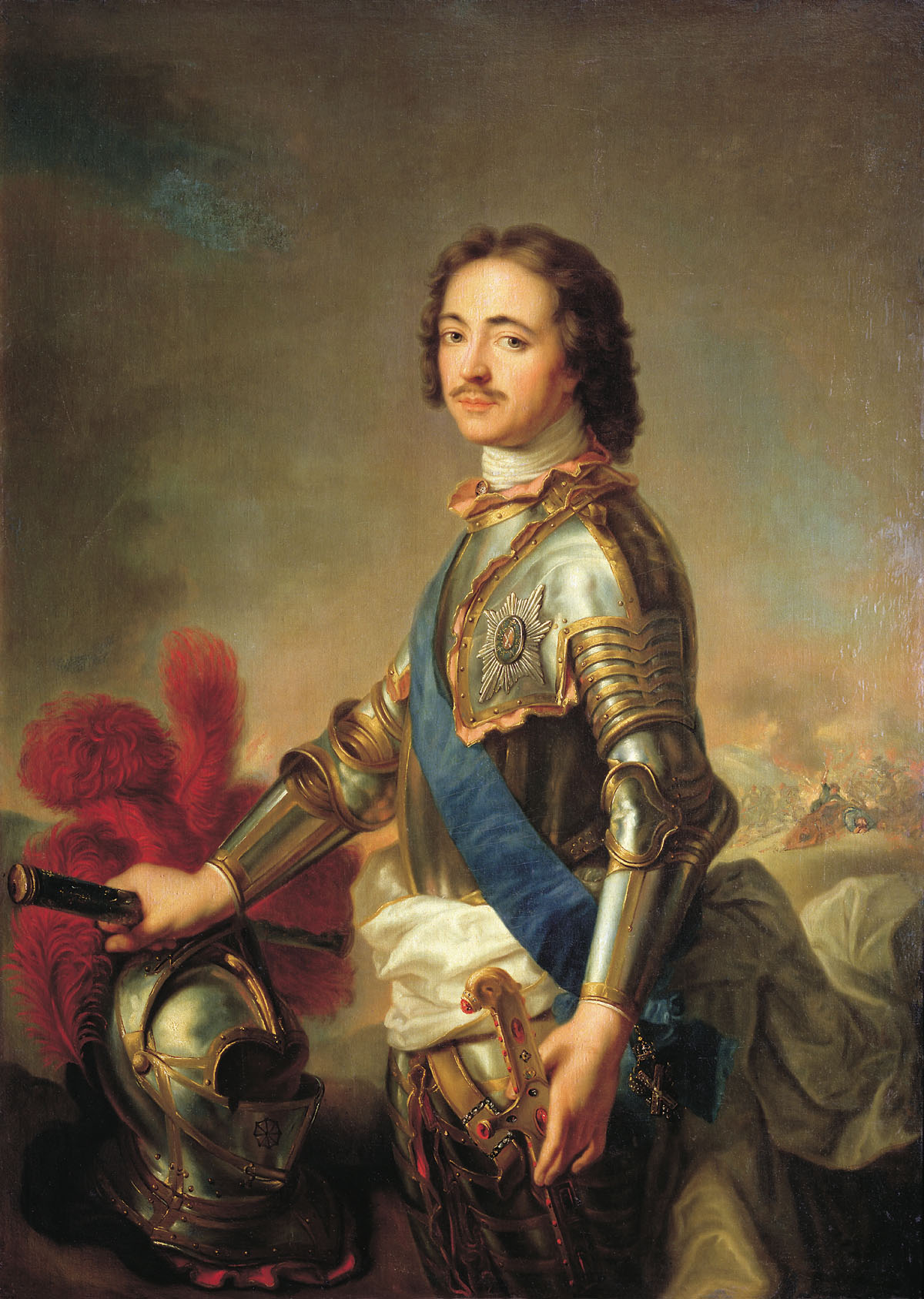
Peter I of Russia, famously known as “Peter the Great,” was a towering figure in Russian history, whose reign marked the transformation of Russia from a relatively isolated and backward state into a major European power. Born on May 30, 1672, in Moscow, Peter’s life was characterized by a relentless pursuit of modernization and reform. His efforts to westernize Russia and expand its influence were instrumental in shaping the nation into a formidable empire that would dominate Eastern Europe for centuries.
Early Life and Accession to the Throne
Peter was the youngest son of Tsar Alexis and his second wife, Natalia Naryshkina. His early life was marked by political turbulence and tragedy. At the tender age of four, Peter lost his father, leaving him and his elder half-brother, Ivan V, in a precarious position. The power struggle that ensued between the Naryshkin and Miloslavsky factions—families of Peter’s mother and his father’s first wife, respectively—would shape Peter’s early years.
In 1682, following the death of his elder half-brother, Tsar Feodor III, Peter was proclaimed Tsar at the age of ten. However, a palace coup orchestrated by the Miloslavsky faction and the elite Streltsy guard resulted in a diarchy, with Peter and his half-brother Ivan V declared co-rulers. Due to their young age, their sister Sophia Alekseyevna was appointed regent, effectively holding the reins of power. During this period, Peter was largely sidelined, spending much of his time in the village of Preobrazhenskoye near Moscow, where he developed a deep interest in military affairs and the workings of the state.
Overcoming Challenges and Seizing Power
The power struggle between the two factions continued, culminating in 1689 when Peter, with the support of his loyal troops, managed to outmaneuver Sophia. He forced her to step down and enter a convent, thereby ending her regency. With Sophia out of the picture and the death of Ivan V in 1696, Peter became the sole ruler of Russia, setting the stage for his ambitious reforms.
Peter’s early experiences with political intrigue and military matters deeply influenced his approach to governance. He realized that Russia, with its outdated military and administrative structures, was ill-equipped to compete with the more advanced European powers. This realization drove Peter to embark on a series of reforms aimed at modernizing Russia and integrating it more closely with the rest of Europe.
The Grand Embassy and Westernization Efforts
In 1697, Peter embarked on an unprecedented journey known as the “Grand Embassy,” traveling incognito across Western Europe to learn about shipbuilding, military tactics, and the latest technological advancements. This journey was a turning point in Peter’s reign, as it exposed him to the ideas and practices that would inspire his sweeping reforms. During his travels, Peter worked incognito as a shipbuilder in the Netherlands, studied European politics, and recruited experts to help him modernize Russia.
Upon his return to Russia in 1698, Peter wasted no time in implementing the knowledge he had gained. He initiated a series of radical reforms aimed at westernizing Russian society, government, and military. One of his first acts was to modernize the Russian army, introducing new training methods, tactics, and equipment based on European models. He also established a navy, which would play a crucial role in his later military campaigns.
Military Reforms and Territorial Expansion
Peter’s military reforms were put to the test in the Great Northern War (1700-1721), a conflict that would define his reign and solidify Russia’s status as a major European power. The war began with a disastrous defeat for Russia at the Battle of Narva in 1700, where Peter’s newly reformed army was crushed by the forces of King Charles XII of Sweden. However, Peter did not give up. He used this setback as an opportunity to further strengthen and modernize his military.
Over the next two decades, Peter led Russia in a series of successful campaigns against Sweden, culminating in the decisive Battle of Poltava in 1709. This victory marked a turning point in the war and established Russia as the dominant power in the Baltic region. The subsequent Treaty of Nystad in 1721 confirmed Russia’s territorial gains, including the regions of Ingria, Estonia, Livonia, and parts of Karelia. These conquests provided Russia with crucial access to the Baltic Sea, opening up new avenues for trade and communication with Western Europe.
Founding of St. Petersburg: Russia’s Window to the West
One of Peter’s most enduring legacies was the founding of St. Petersburg in 1703. Located on the banks of the Neva River, near the Baltic Sea, the city was strategically positioned to serve as Russia’s “window to the West.” Peter envisioned St. Petersburg as a modern European-style city, and he personally oversaw its construction, often working alongside laborers to bring his vision to life.
St. Petersburg quickly became the new capital of Russia, symbolizing the country’s shift towards Europe and away from its traditional Muscovite roots. The city’s Western architecture, designed by European architects, and its vibrant cultural life reflected Peter’s desire to transform Russia into a modern, European state. St. Petersburg remained the capital of Russia for more than two centuries and continues to be one of the country’s most important cultural and economic centers.
Administrative and Social Reforms
Peter’s reforms were not limited to the military and territorial expansion; he also sought to overhaul Russia’s administrative and social structures. In 1708, he introduced a new system of provincial government, dividing the country into eight large governorships, each overseen by a governor appointed by the Tsar. This system was designed to improve the efficiency of governance and strengthen central control over the vast Russian territories.
Peter also took steps to reduce the power of the traditional nobility (boyars) and promote a merit-based system of government. He established the Table of Ranks in 1722, a formal hierarchy that allowed individuals to advance in government service based on merit rather than birth. This move was aimed at creating a more professional and capable bureaucracy, loyal to the Tsar rather than to the old aristocracy.
In addition to his administrative reforms, Peter sought to modernize Russian society by introducing Western customs and practices. He famously imposed a beard tax on the nobility, forcing them to shave their beards in line with Western fashion. He also encouraged Western-style dress, introduced the Julian calendar, and simplified the Cyrillic alphabet to make it more accessible.
Religious Reforms and Control of the Orthodox Church
Peter’s reforms extended to the Russian Orthodox Church, which had long been a powerful institution in Russian society. In 1700, following the death of Patriarch Adrian, Peter chose not to appoint a new patriarch, effectively leaving the position vacant. Instead, he established the Holy Synod in 1721, a government body that took control of church affairs, effectively making the church a department of the state. This move allowed Peter to exert greater control over the church and reduce its influence in political matters.
Peter’s religious reforms were part of his broader effort to secularize Russian society and reduce the power of the traditional institutions that had long resisted change. By bringing the church under state control, Peter was able to ensure that his reforms would not be undermined by religious opposition.
Economic Reforms and Industrialization
Peter’s vision for a modern Russia extended to the economy as well. He recognized that a strong economy was essential for sustaining his military ambitions and ensuring Russia’s long-term stability. To this end, he introduced a series of economic reforms aimed at promoting industrialization and increasing state revenues.
One of Peter’s key economic initiatives was the development of Russia’s mining and metallurgical industries, particularly in the Ural Mountains. He established state-owned factories and encouraged private investment in these industries, laying the groundwork for Russia’s emergence as a major producer of iron and other metals. These efforts were crucial in supporting Russia’s military expansion and building the infrastructure needed for economic growth.
Peter also reformed the tax system, introducing new taxes on land, households, and even beards, to increase state revenues. He established state monopolies on key commodities such as salt, tobacco, and vodka, further boosting government income. These measures, while often unpopular, were effective in providing the funds needed to support Peter’s ambitious reforms and military campaigns.
Legacy of Peter the Great
Peter the Great’s reign was marked by a relentless drive to modernize Russia and transform it into a major European power. His reforms touched nearly every aspect of Russian life, from the military and government to society and the economy. While his methods were often harsh and his reforms met with resistance, Peter’s vision for a modern Russia laid the foundation for the country’s development over the next several centuries.
Peter’s legacy is evident in the enduring institutions he created, such as the Russian navy, the Table of Ranks, and the city of St. Petersburg. His efforts to westernize Russia and integrate it into the European political and cultural sphere had a profound impact on the nation’s history, influencing everything from its art and architecture to its political system.
However, Peter’s reforms also had their limitations. The process of modernization he initiated was far from complete by the time of his death in 1725, and many of the changes he introduced would take decades or even centuries to fully take root. Moreover, the centralization of power in the hands of the Tsar, while effective in the short term, set a precedent for autocratic rule that would have significant consequences for Russia’s future.
Conclusion: The Unfinished Legacy of Peter the Great
Peter the Great remains one of the most complex and controversial figures in Russian history. His efforts to transform Russia into a modern, European-style state were ambitious and far-reaching, but they also came at a great cost. Peter’s reign was characterized by constant warfare, heavy taxation, and the imposition of new social norms that were often met with resistance.
Despite these challenges, Peter’s legacy endures. He is remembered as the ruler who dragged Russia, often kicking and screaming, into the modern era. His reforms laid the groundwork for the country’s emergence as a major European power, and his influence can still be seen in the institutions and culture of modern Russia.
Peter the Great’s life and reign are a testament to the power of visionary leadership and the challenges of implementing radical change. His legacy is one of both achievement and contradiction, reflecting the complexities of Russia’s transformation from a medieval state to a modern empire.


