
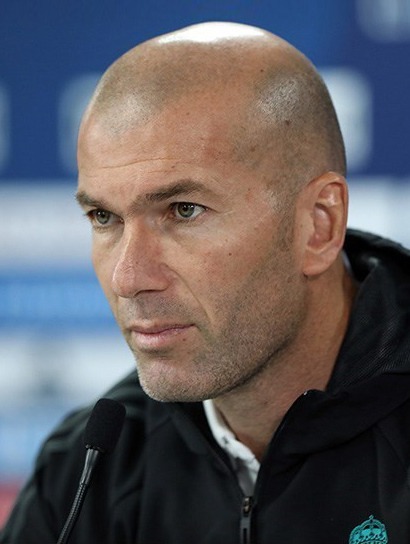
Zinedine Zidane, born on June 23, 1972, in Marseille, France, is one of the most celebrated figures in the history of football. Known for his exceptional skill, vision, and leadership on the pitch, Zidane’s career has spanned decades, from his early days in French football to his legendary status as a player and coach for some of the world’s most prestigious clubs. His journey is a tale of brilliance, controversy, and ultimate triumph.
Early Life and Rise in French Football
Zinedine Zidane, often referred to as “Zizou,” was born to Algerian immigrants in La Castellane, a rough neighborhood in Marseille. Despite the challenging environment, Zidane’s passion for football was evident from a young age. He started playing football on the streets and quickly caught the attention of local scouts. At the age of 14, Zidane joined the youth academy of Cannes, marking the beginning of his professional football journey.
Zidane made his professional debut for Cannes at the age of 16 in 1988. His elegance on the ball, combined with his vision and dribbling ability, quickly set him apart from his peers. Over the course of four seasons with Cannes, Zidane made 61 appearances and scored six goals, helping the club qualify for European competitions.
In 1992, Zidane moved to Bordeaux, where he continued to develop as a player. His time at Bordeaux was marked by consistent performances, with Zidane scoring 28 goals in 139 appearances. His skillful playmaking and ability to control the tempo of the game attracted the attention of top European clubs, and it wasn’t long before Zidane would take the next big step in his career.
International Debut and Ascendancy
Zidane made his debut for the French national team in 1994 during a match against the Czech Republic. Coming on as a substitute, Zidane made an immediate impact, scoring two goals in just 17 minutes to salvage a 2-2 draw for France. This performance was a precursor to the significant role Zidane would play for Les Bleus in the years to come.
In 1996, Zidane made a move to Italy to join Juventus, one of the biggest clubs in Europe. Under the management of Marcello Lippi, Zidane became the fulcrum of Juventus’s midfield, guiding the team to two consecutive Serie A titles in 1997 and 1998. Zidane’s influence extended beyond domestic competitions, as he played a key role in Juventus’s journey to the UEFA Champions League finals in 1997 and 1998, although they lost both times.
World Cup Glory and Global Recognition
Zidane’s crowning achievement came in 1998 when he led France to victory in the FIFA World Cup, held on home soil. In the final against Brazil, Zidane scored two crucial goals, both headers from corner kicks, to help France secure a 3-0 victory and their first-ever World Cup title. Zidane’s dominant performance on the world’s biggest stage catapulted him to global stardom, earning him the Ballon d’Or in 1998 and the FIFA World Player of the Year award.
Zidane’s success continued in 2000 when he played a pivotal role in France’s triumph at the UEFA European Championship. Although Zidane did not score in the final against Italy, his influence throughout the tournament was undeniable, as he orchestrated France’s midfield with his trademark composure and creativity. Zidane’s ability to rise to the occasion in crucial moments solidified his reputation as one of the best players of his generation.
The Galáctico Era at Real Madrid
In 2001, Zidane made a record-breaking move to Real Madrid, joining the club for a then-world record fee of 150 billion lire (approximately €75 million). At Real Madrid, Zidane became part of the famous “Galácticos” era, a team filled with star players like Luís Figo, Raúl, Ronaldo, and later, David Beckham. Zidane’s arrival added another layer of flair and creativity to an already star-studded lineup.
Zidane’s time at Real Madrid was marked by several memorable moments, but none more iconic than his match-winning goal in the 2002 UEFA Champions League final against Bayer Leverkusen. With the score tied at 1-1, Zidane struck a stunning left-footed volley from the edge of the box, a goal that has since been etched in football history as one of the greatest ever scored in a Champions League final. This victory secured Real Madrid’s ninth European Cup and further enhanced Zidane’s legendary status.
Over the course of his five seasons with Real Madrid, Zidane helped the club win several major honors, including La Liga, the Spanish Super Cup, and the UEFA Super Cup. His performances earned him the FIFA World Player of the Year award again in 2003, making him one of the few players to have won the prestigious award three times.
The 2006 World Cup and the Infamous Incident
In 2006, Zidane came out of international retirement to lead France once again in the FIFA World Cup held in Germany. At 34 years old, Zidane was in the twilight of his career, but his performances throughout the tournament were nothing short of extraordinary. Zidane guided France to the final, where they faced Italy in a highly anticipated matchup.
The 2006 World Cup final is remembered for both Zidane’s brilliance and the controversy that ensued. Zidane opened the scoring with a Panenka-style penalty, displaying his trademark audacity even in the tensest of moments. However, the match took a dramatic turn in extra time when Zidane was sent off for headbutting Italian defender Marco Materazzi in the chest after an exchange of words. The incident shocked the footballing world and marked a bitter end to Zidane’s illustrious playing career. Despite the red card, Zidane was awarded the Golden Ball as the best player of the tournament, a testament to his overall impact.
Transition to Coaching: A New Chapter
After retiring as a player, Zidane transitioned into coaching, a move that many anticipated given his deep understanding of the game. He initially joined Real Madrid’s backroom staff, working as an advisor to the president and later as a special advisor to the first team. In 2013, Zidane became the assistant coach to Carlo Ancelotti at Real Madrid, helping guide the team to a historic Champions League victory, known as La Décima, in 2014.
In 2014, Zidane took over as the head coach of Real Madrid Castilla, the club’s reserve team, gaining valuable experience in managing a team. His big break came in January 2016 when he was appointed as the head coach of Real Madrid’s first team, replacing Rafael Benítez.
Zidane’s impact as a manager was immediate. In his first season, he led Real Madrid to their 11th UEFA Champions League title, becoming the first French manager to win the competition. Zidane’s managerial success continued as he guided Real Madrid to two more consecutive Champions League titles in 2017 and 2018, making him the first coach to win three consecutive European Cups in the Champions League era.
Under Zidane’s leadership, Real Madrid also won the La Liga title in the 2016-2017 season, along with multiple FIFA Club World Cups, UEFA Super Cups, and Spanish Super Cups. Zidane’s ability to manage a squad full of world-class talent while maintaining a harmonious dressing room was widely praised.
In May 2018, after winning his third consecutive Champions League title, Zidane shocked the football world by announcing his resignation as Real Madrid’s head coach. His departure marked the end of one of the most successful managerial stints in football history. However, Zidane returned to the club less than a year later in March 2019, tasked with rebuilding a team that had struggled in his absence.
Legacy and Impact on Football
Zinedine Zidane’s legacy in football is immense, both as a player and as a coach. As a player, Zidane was known for his grace on the ball, his ability to control games, and his penchant for delivering in the most critical moments. His blend of technical skill, vision, and physical presence made him one of the most complete midfielders the game has ever seen. Zidane’s influence extended beyond the pitch, as he became a symbol of multicultural France, inspiring millions with his success story.
As a coach, Zidane’s achievements are equally remarkable. His calm demeanor, tactical acumen, and ability to manage egos in a star-studded squad set him apart as one of the top managers in the world. Zidane’s success with Real Madrid, particularly in the Champions League, has cemented his status as one of the greatest football minds of his generation.
Zidane’s contributions to football have been recognized with numerous individual accolades, including multiple Ballon d’Or nominations and FIFA World Player of the Year awards. His name is synonymous with excellence, and his legacy will continue to inspire future generations of players and coaches.
In conclusion, Zinedine Zidane is a true icon of football, whose impact on the sport is unparalleled. From his early days in Marseille to his legendary status at Real Madrid, Zidane’s journey is a story of talent, dedication, and greatness. As both a player and a coach, Zidane has left an indelible mark on the world of football, and his legacy will endure for many years to come.


